
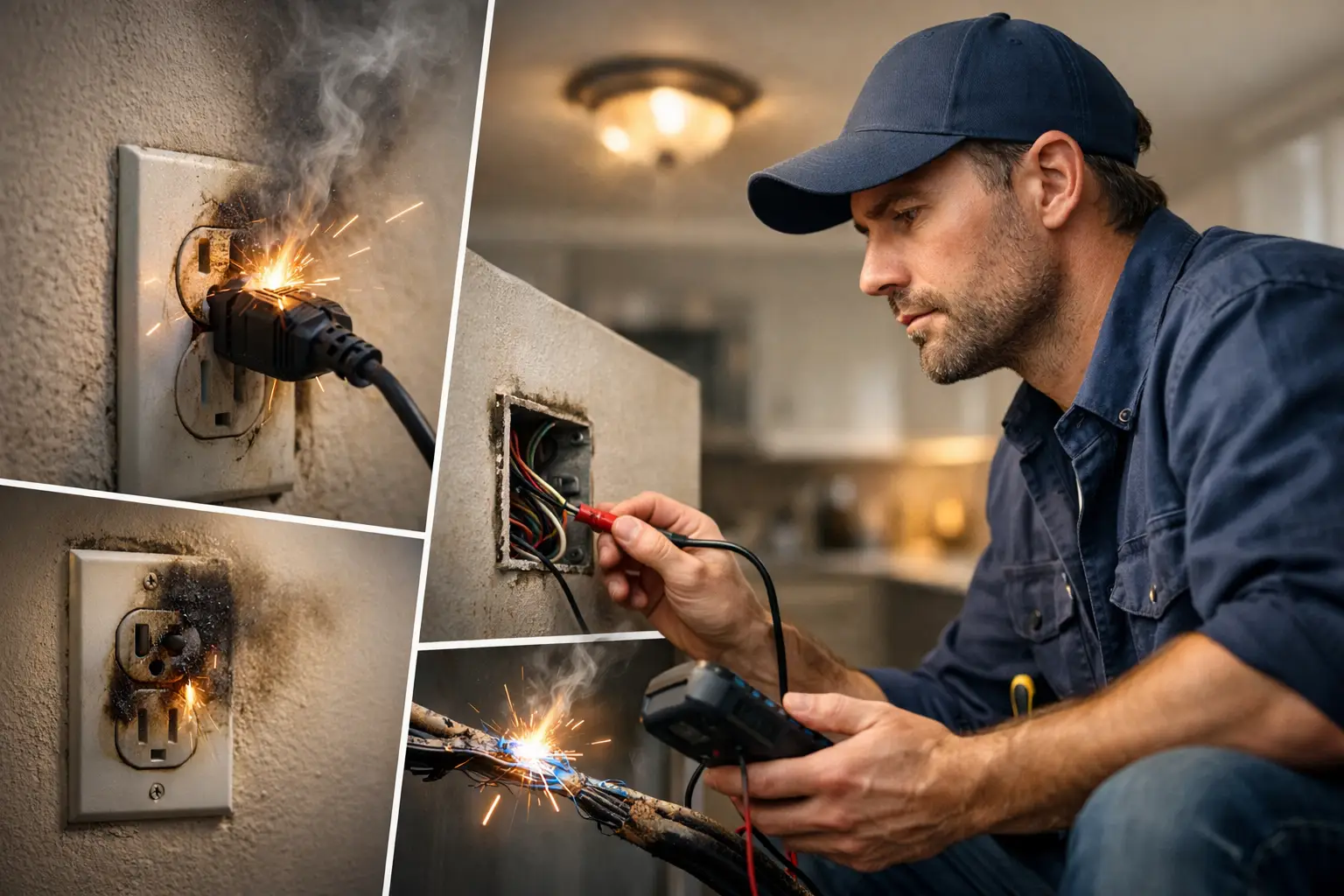
A plug socket that suddenly feels warm, a fuse box that keeps tripping, or lights that flicker when the kettle boils are not problems to ignore. If you are asking when should you call an electrician, the safest answer is usually before a small fault becomes a shock risk, electrical fire or costly repair.
Some issues need an emergency call-out. Others can be booked as routine work. Knowing the difference helps homeowners, tenants, landlords and property managers act quickly without paying for work they do not need.
Call an electrician immediately for these warning signs
Electrical faults can develop behind walls, under floors or inside appliances, so there is not always an obvious visible danger. However, certain signs mean you should switch off the affected circuit if it is safe to do so and arrange professional help promptly.
Burning smells, smoke or scorch marks
A burning smell from a socket, switch, consumer unit or appliance is an urgent warning. So are brown marks around a socket, buzzing noises, smoke, sparks or a switch plate that feels unusually hot. Do not keep using the circuit to see whether the problem returns.
If there is fire, smoke or an immediate threat to life, leave the property and call 999. Do not use water on an electrical fire. For a fault without an active fire, turn off the electricity at the consumer unit only if you can do so safely, then call a qualified electrician.
Repeated tripping at the consumer unit
A circuit breaker or RCD is designed to cut power when it detects a fault. Resetting it once after a clear cause, such as an overloaded extension lead, may solve the problem. But if it trips again, especially when a particular appliance or circuit is used, there may be damaged wiring, moisture ingress or a faulty appliance.
Avoid repeatedly resetting the switch. The protection is operating for a reason. An electrician can test the circuit, identify the source of the fault and advise whether the issue is fixed wiring, an appliance or an overloaded setup.
Electric shocks or tingling sensations
Even a mild tingle from a tap, appliance, light fitting or socket should be taken seriously. It may point to poor earthing, damaged wiring or a fault in an appliance. Keep people away from the affected item and stop using it until it has been checked.
This is particularly urgent in kitchens, bathrooms, utility rooms and outdoor areas, where water increases the risk. Do not attempt to repair a live appliance, remove a socket front or investigate wiring yourself.
Water near electrical fittings
A leak above a ceiling light, water entering a consumer unit, or damp around a socket requires swift action. Water and electricity are a dangerous combination, even where power still appears to be working normally.
If it is safe, isolate the affected circuit. Call a plumber to stop the leak and an electrician to inspect the electrical installation before the supply is used again. One trade cannot always safely sign off the other trade's work, so both checks may be needed.
When should you call an electrician for non-emergency problems?
Not every electrical job is an emergency, but delayed maintenance can become expensive. Booking a local electrician early is often the safer and more affordable option.
Lights flicker, dim or stop working
One failed bulb is usually simple. Flickering lights throughout a room, lights that dim when appliances start, or fittings that fail repeatedly can indicate a loose connection, overloaded circuit or issue with the supply. A qualified electrician can test the cause rather than replacing parts at random.
Older properties sometimes have wiring that was not designed for modern demand. If the problem appears when using high-load appliances such as kettles, showers, tumble dryers or electric heaters, the circuit may need assessment.
Sockets are loose, damaged or no longer reliable
A socket that moves in the wall, has cracked plastic, makes a crackling sound or only works at a certain angle should be repaired. Damaged sockets can expose live parts or create poor connections that overheat.
Extension leads should not become a permanent answer to too few sockets. If your home relies on daisy-chained extension leads or adaptors, ask an electrician about adding sockets or updating circuits. It is safer, neater and better suited to daily use.
Your home still has old electrical features
Signs of an ageing installation include a fuse box with rewireable fuses, old-style light switches, fabric-covered cables, aluminium wiring or a lack of RCD protection. Age alone does not prove that an installation is unsafe, but it is a good reason to arrange an inspection.
An Electrical Installation Condition Report, often called an EICR, gives a clearer picture of the condition of fixed wiring. It can identify defects, departures from current safety standards and work that should be prioritised.
You are renovating, extending or changing a room's use
Electrical work should be planned alongside the build, not added at the end. A new kitchen, loft conversion, extension, home office, bathroom or garden room may need new circuits, suitable lighting, ventilation connections, smoke alarms and additional sockets.
Getting an electrician involved before walls are closed can reduce disruption and prevent expensive rework. Some domestic electrical work is notifiable under Building Regulations, particularly in certain locations or where new circuits are installed. A competent electrician can explain what applies and provide the right certification.
Electrical jobs that should not be DIY
Changing a standard light bulb is one thing. Altering fixed wiring is another. DIY work can create hidden faults that only become apparent when a circuit is under load, and poor work can affect insurance, property sales and safety checks.
Call an electrician for jobs such as:
- replacing or moving sockets, switches and wired lighting
- installing a new cooker circuit, electric shower or induction hob
- upgrading a consumer unit or adding an RCD
- installing outdoor lighting, garage power or garden electrics
- fitting an EV charger, solar-related electrical equipment or battery storage
- investigating faults in wiring, rather than simply replacing an appliance
Some minor tasks may be legally possible for a capable person, but that does not mean they are low risk. If you are unsure whether a job involves fixed wiring, assume it does and seek professional advice.
Tenants, landlords and shared properties
Tenants should report damaged sockets, faulty lights, repeated tripping or signs of overheating to their landlord or managing agent straight away. Do not make repairs to the fixed installation yourself unless you have explicit permission and the right competence. If there is immediate danger, take sensible steps to isolate the area and contact emergency services where needed.
Landlords in England must ensure electrical installations are inspected and tested at least every five years by a qualified person, with a valid EICR kept and supplied as required. Requirements can differ across the UK, so landlords and property managers should check the rules that apply to their property location.
In shared houses, avoid assuming another occupant has reported the issue. Clear records of faults, call-outs and certificates protect residents and make future maintenance easier to manage.
Choosing the right electrician
For urgent faults, availability matters, but it should not replace basic checks. Describe the symptoms clearly: what happened, which rooms are affected, whether the consumer unit has tripped, and whether there is water, heat, smoke or a burning smell. This helps the electrician assess urgency before arriving.
For planned work, ask what is included in the quote, whether testing and certification are included, and whether any making-good work is excluded. A cheaper price may not cover investigation time, materials, notification or certificates. Comparing like for like avoids surprises later.
Look for a trusted local electrician with relevant experience, clear communication and appropriate qualifications for the work. For regulated or notifiable work, ask how certification and Building Regulations compliance will be handled. A proper handover should leave you with the information you need, not just a working switch or new socket.
Do not wait for a fault to become an emergency
Electrical problems rarely improve through repeated use. If something is hot, damaged, unreliable, wet, sparking or repeatedly tripping, stop using it and arrange a professional inspection. For routine repairs, upgrades and urgent call-outs, VeriTrade UK can help you find trusted local tradespeople who are ready to assess the job and get your property safely back on track.