
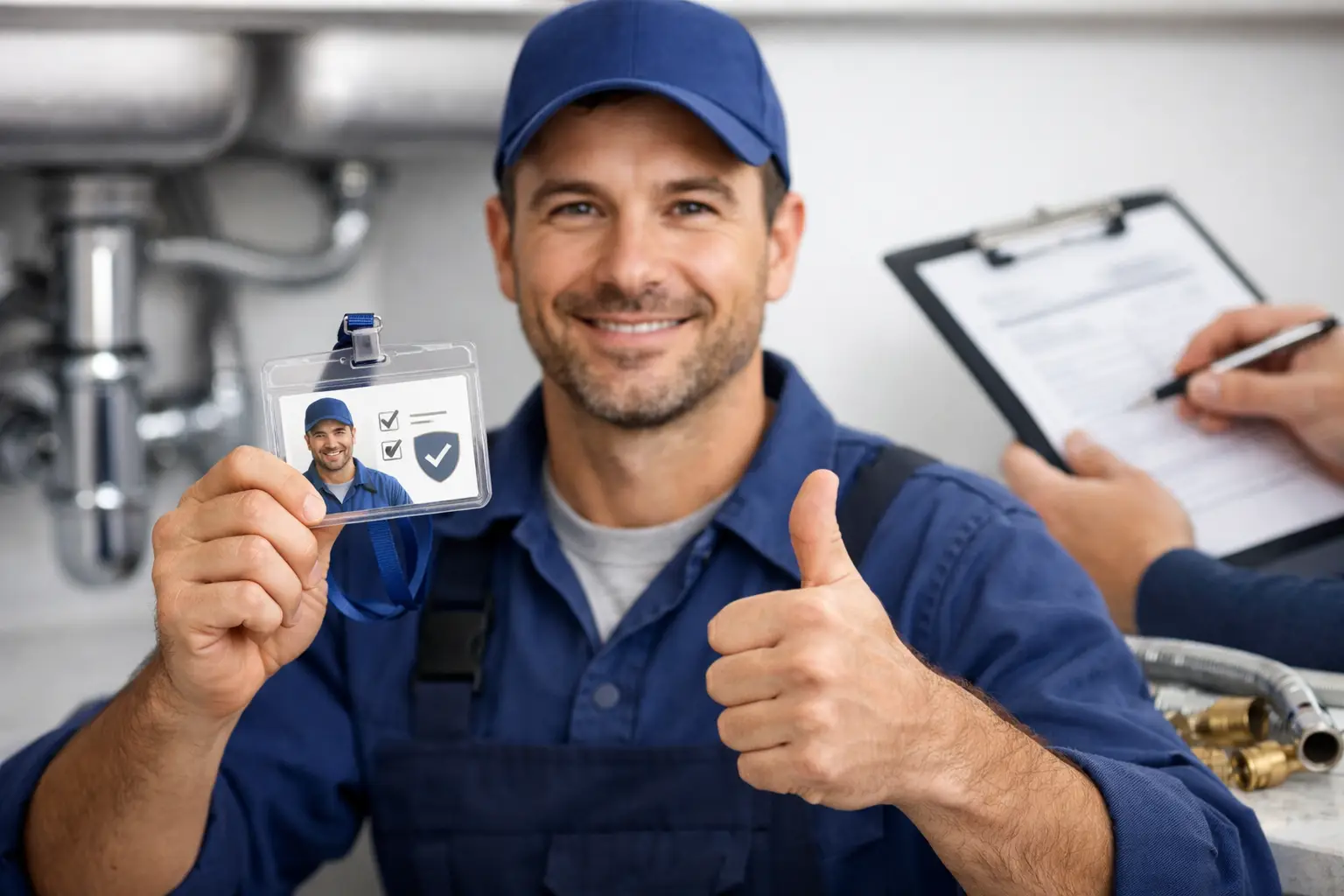
A leaking stopcock, failed boiler or blocked soil pipe is rarely a good moment to start comparing certificates. Yet knowing what to ask for can prevent an expensive mistake. Verified plumber credentials explained simply means separating the evidence that matters for your particular job from badges that look reassuring but do not prove the right competence.
For homeowners, tenants, landlords and property managers, the aim is straightforward: hire someone who is qualified for the work, properly insured and accountable if something goes wrong. For plumbers, clear credentials help customers choose with confidence instead of competing on price alone.
What verified plumber credentials really mean
There is no single UK licence that every plumber must hold before carrying out every type of plumbing work. That surprises many people. A plumber may be highly capable in bathrooms, leaks, taps and pipework without needing membership of one central register.
The credentials required depend on the job. Installing a shower tray and repairing a toilet cistern are not the same as altering gas pipework, working on an unvented hot-water cylinder or fitting a drinking-water system. The right question is not, “Are you certified?” It is, “What evidence shows you are competent and authorised for this work?”
A credible verification process normally considers identity and business details, relevant qualifications or registrations, insurance, work history and customer feedback. None of these items works perfectly in isolation. Together, they give you a much clearer picture of who will be working in your property.
Qualifications show training, not a blanket approval
Plumbing qualifications demonstrate that someone has completed recognised training or assessment in a particular area. You may see NVQs, diplomas, apprenticeships, manufacturer training or specialist certificates. These can be strong indicators of technical knowledge, especially where the qualification clearly relates to the job being quoted for.
However, a qualification alone does not tell you how recently the plumber has worked on similar properties, whether they carry insurance or whether they communicate and finish jobs well. Ask what experience they have with your type of work. A plumber who regularly replaces bathroom taps may not be the best fit for a complex heating fault, and vice versa.
For larger jobs, ask for a written scope of work. It should state what is included, the materials proposed, who is responsible for any associated electrical or building work, and how unexpected issues will be handled. Credentials matter, but a clear agreement protects both sides.
Gas work requires Gas Safe registration
If the job involves a gas boiler, gas fire, cooker or gas pipework, the engineer must be Gas Safe registered. This is a legal requirement in the UK for paid gas work. Do not rely only on a logo on a van, website or social-media profile.
Ask to see the engineer’s Gas Safe ID card before work begins and check that they are registered for the specific type of appliance involved. Gas registration categories matter. An engineer may be registered for domestic boilers but not necessarily for every kind of gas appliance or commercial installation.
A Gas Safe registered engineer should provide the relevant documentation after qualifying work, such as a gas safety record or installation paperwork. Keep it with your property records. Landlords have separate legal duties around annual gas safety checks, so this is not an area to treat as a routine plumbing repair.
Unvented cylinders need the right competence
An unvented hot-water cylinder operates under pressure and must be installed and maintained by a competent person. Look for evidence that the plumber is qualified to work on unvented systems. This is commonly referred to as G3 certification or qualification.
The trade-off is simple: it may cost more to use a suitably qualified specialist, but incorrect work on a pressurised system can cause leaks, damage and serious safety risks. If a quote for cylinder work is unusually low, check exactly what competence and notification requirements are covered before accepting it.
Water Regulations approval can be relevant
For certain plumbing work connected to the water supply, Water Regulations knowledge and approved-contractor schemes can be useful reassurance. These schemes are especially relevant where work could affect drinking-water hygiene, backflow prevention or compliance with local water regulations.
This is not a mandatory credential for every minor repair. Still, for new bathrooms, extensions, commercial premises or work involving altered supply pipework, it is sensible to ask how the plumber will ensure compliance. A competent professional will be able to explain this in plain language.
Insurance protects the customer and the plumber
Public liability insurance is one of the most practical checks you can make. It can provide cover if the plumber’s work causes accidental injury or property damage, subject to the policy terms. For example, an incorrectly fitted connection that damages a kitchen ceiling could become costly very quickly.
Ask whether the plumber holds current public liability insurance and whether the cover is appropriate for the scale of the job. You do not need to interrogate every policy detail for a dripping tap, but you should not feel awkward asking for confirmation on significant work.
Insurance is not proof of workmanship, and it does not remove the need for a proper quote. It is a safeguard when the unexpected happens. Professional indemnity insurance may also be relevant where a contractor is responsible for designs or technical advice, though it is less common for straightforward domestic plumbing jobs.
Identity, traceability and local accountability
Verification should make it easier to establish who you are hiring. A genuine local tradesperson should be able to provide a business name, contact number, address or service area, and a clear way to contact them after the job. If they trade as a limited company, you can also check that company details match what they have given you.
Be cautious if someone will only communicate through disappearing messages, refuses to provide a written quote or insists on cash before any work has started. These are not automatic proof of wrongdoing, but they make disputes much harder to resolve.
For emergency work, you may need to make a fast decision. Even then, ask for the call-out charge, hourly or fixed rates, and whether materials are extra before authorising work. Take photos of the issue if safe to do so, and keep invoices and messages. A trusted professional will not object to reasonable questions.
Reviews help, but context matters
Reviews can reveal whether a plumber arrives on time, explains problems clearly and leaves the property tidy. Look for recent feedback that mentions work similar to yours, rather than focusing only on an overall star rating.
A small local business with ten detailed, recent reviews may be easier to assess than one with hundreds of vague ratings from years ago. Also consider how the tradesperson responds when something does not go to plan. Plumbing often involves hidden pipework, old fittings and problems that only become visible once work starts. A fair explanation and a revised quote are not necessarily red flags.
Be more concerned by a pattern of missed appointments, unexplained price changes, pressure for immediate payment or complaints that the trader disappeared after the work. Good verification combines customer experience with documentary checks, rather than treating reviews as the whole story.
How to check credentials before booking
For ordinary plumbing repairs, begin by confirming the plumber’s identity, relevant experience, public liability insurance and written price basis. For specialist work, ask for the specific evidence that applies: Gas Safe registration for gas, unvented-cylinder competence for pressurised hot-water systems, and suitable water-regulations knowledge where the supply is being altered.
Then compare like with like. One quote may include diagnosis, materials, waste removal and a guarantee, while another covers only labour. The cheapest option can become the most expensive if it leaves remedial work, damage or missing compliance paperwork behind.
It is also worth asking what guarantee applies to labour and supplied parts. Get the answer in writing, along with payment terms. Deposits can be reasonable for booked work or materials, particularly on larger projects, but a request for the full amount upfront should prompt further questions.
Verified credentials are part of a better hiring decision
The point of checking credentials is not to turn a household repair into a paperwork exercise. It is to make a sensible decision before someone starts work on your water, heating or gas systems. The level of checking should match the risk: a leaking tap needs less scrutiny than a boiler installation or full bathroom renovation.
When you use a marketplace built around trusted local tradespeople, such as VeriTrade UK, verification and clear job details can reduce the uncertainty at the start. You should still discuss the specific work, review the quote and make sure the individual attending is right for the job.
A good plumber will welcome clear questions because they protect their reputation as much as your property. Choose the person who can show relevant competence, explain the work without jargon and give you confidence before the first tool comes out.