
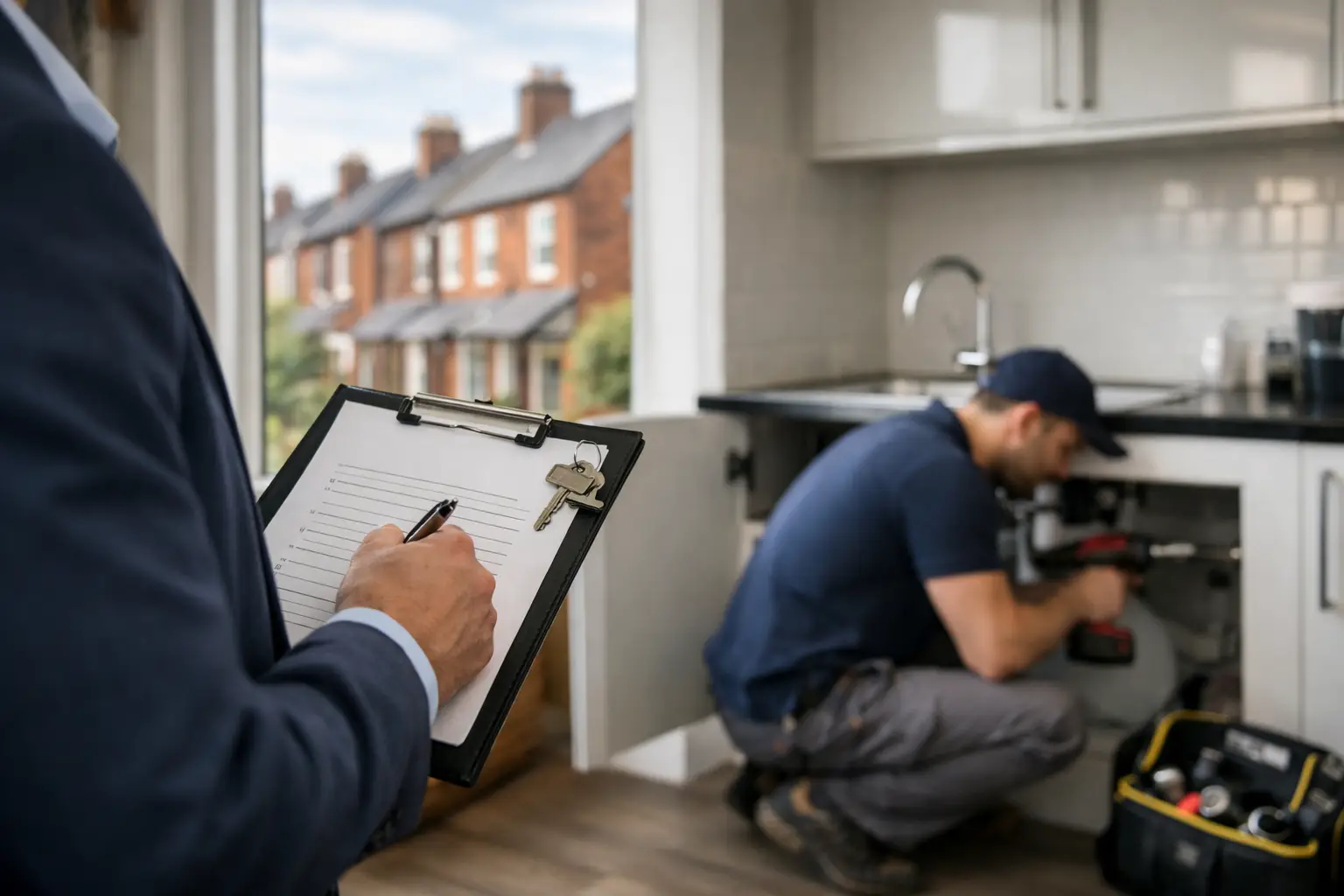
A boiler failing on a cold evening, water coming through a ceiling or a consumer unit that keeps tripping are not jobs to leave on a list for next month. Landlord repair responsibilities exist to keep rented homes safe, weatherproof and fit to live in. For landlords and property managers, knowing where the duty starts helps you act quickly, protect the property and avoid a small fault becoming an expensive dispute.
The precise rules differ across England, Wales, Scotland and Northern Ireland. Your tenancy agreement, the age and type of property, and the cause of the damage also matter. But the practical principle is consistent: landlords must maintain the building and the essential services they provide, while tenants must report faults promptly and take reasonable care of the home.
What are landlord repair responsibilities?
In England and Wales, the starting point for most private tenancies is the landlord's duty to keep the structure and exterior in repair. This includes the roof, outside walls, windows, gutters, drains, pipes and foundations. It also covers installations for water, gas, electricity, sanitation, space heating and hot water.
Put simply, if the home cannot retain water, safely supply it, drain it, stay secure or provide safe heating and power, the landlord will usually need to arrange the repair. That remains true even when the tenancy agreement says something different. A contract cannot remove a landlord's core legal obligations.
Common examples include a leaking roof, broken boiler, faulty radiator, blocked external drain, damaged window frame, unsafe wiring, failed shower pump or a toilet that will not flush. In a flat, responsibility can be less straightforward where the issue sits in a communal area or is controlled by a freeholder or managing agent. Even then, the tenant's point of contact is normally their landlord or property manager, who should chase the appropriate party rather than leave the tenant without an answer.
Repairs landlords are usually expected to arrange
Some issues are clearly urgent, while others need planned maintenance. Both still need attention within a reasonable time after the landlord has been told.
Heating, hot water and plumbing
A broken boiler, no heating in winter, loss of hot water, a major leak or a backed-up toilet can quickly make a property unsuitable to occupy. These faults should be assessed promptly, with a clear plan for repair. If a replacement part is delayed, consider practical temporary measures, particularly where there are children, older residents or vulnerable tenants.
Small plumbing leaks should not be ignored simply because water is still available. A slow leak under a sink can damage cabinets, flooring and neighbouring properties, while hidden pipework leaks can lead to mould and structural damage.
Electrical and gas safety
Landlords have specific safety duties alongside their general repair responsibilities. Gas appliances and flues must be maintained safely, with the required annual gas safety checks carried out by a suitably qualified engineer. Electrical installations must also be kept safe, and landlords in England must have a valid electrical installation condition report at the required intervals.
A burning smell, sparking socket, exposed wiring, repeated fuse trips or suspected gas leak needs immediate action. Tenants should leave the property and follow emergency safety guidance where necessary. Landlords should use appropriately qualified, insured professionals for gas and electrical work, not attempt a quick fix or rely on an unqualified handyman.
Damp, mould and ventilation problems
Damp and mould are rarely solved by wiping a wall and telling a tenant to open a window more often. Condensation can be influenced by everyday living habits, but persistent mould may point to inadequate ventilation, poor insulation, leaking gutters, faulty extractor fans, penetrating damp or a plumbing leak.
The right response is to identify the cause. A professional inspection may be needed where the source is unclear. Landlords should record the report, arrange remedial work and make sure any affected area is properly dried and treated. This protects the tenant's health and prevents repeat damage.
Doors, windows, roofs and drains
External doors and accessible windows must be secure and capable of closing properly. Damage to locks after a break-in may need urgent attention, especially if the property cannot be secured overnight. Roof defects, missing tiles, overflowing gutters and blocked drains may look like exterior maintenance, but they can quickly cause internal damage and should be addressed before bad weather makes them worse.
When is a tenant responsible for a repair?
Tenants are responsible for using the property in a tenant-like way. That generally means keeping it reasonably clean, reporting damage quickly, changing ordinary consumables where agreed, such as light bulbs, and taking sensible steps to prevent avoidable harm. They should not cause damage through neglect or misuse.
If a tenant smashes an internal door, blocks a sink by putting unsuitable items down it, damages a fixture through carelessness or fails to report a leak until it causes substantial damage, they may be liable for the cost. The evidence matters. A landlord should not automatically deduct money from a deposit without clear records, invoices, check-in and check-out reports, and a fair explanation of the charge.
Fair wear and tear is different. A carpet becoming worn over time, ageing sealant, a tired appliance or paint scuffs from normal occupation are usually a landlord cost. The useful test is whether the damage goes beyond ordinary use, considering the property's condition at the start of the tenancy and how long the tenant has lived there.
How quickly should a landlord respond?
There is no single repair deadline that fits every fault. The legal expectation is generally a reasonable time, and what is reasonable depends on risk. A gas leak, dangerous electrical fault, flooding, total heating failure in cold weather or an insecure external door warrants an emergency response. A dripping tap or loose kitchen cupboard may be less urgent, but should still be booked and completed without unnecessary delay.
Good communication prevents many disputes. Acknowledge the report, explain what will happen next, give the tenant a realistic appointment window and update them if a part or specialist is needed. Keep a written record of the report, photographs, contractor findings, quotes, appointments and completed work. This is useful for managing the property properly and if a disagreement later arises.
Tenants should report issues in writing where possible, including photos or video and details of when the problem began. They should allow reasonable access for inspection and repairs. In most non-emergency cases, landlords must give proper notice before entering, commonly at least 24 hours, and should arrange a suitable time. Emergency access is different where immediate action is needed to protect people or prevent serious damage.
A practical process for handling repair reports
A clear process keeps repairs moving and reassures tenants that they are being taken seriously.
- Assess the risk immediately. Ask whether there is water escaping, loss of heating or hot water, an electrical hazard, a gas concern, loss of security or a health risk.
- Make the property safe. Isolate water or power only where it is safe to do so, arrange an emergency call-out where needed and give the tenant clear instructions.
- Send the right trade. A qualified plumber, Gas Safe engineer, electrician, roofer or builder can identify the cause rather than merely cover the symptoms.
- Confirm the scope and cost. Obtain a written diagnosis and agree any wider remedial work, particularly for damp, recurring leaks or damage involving neighbouring flats.
- Check the completed work. Make sure the tenant has heating, water, safe electrics or secure access again, and retain the invoice and any certificates.
For landlords managing several properties, a trusted local network matters. Using verified tradespeople with relevant qualifications and clear availability can reduce delays when an urgent job comes in. VeriTrade UK can help property owners find trusted local professionals for plumbing, electrical, building and emergency repair work.
Different rules across the UK
This article gives a practical overview, not legal advice. England, Wales, Scotland and Northern Ireland have different housing laws and enforcement routes. Wales has its own occupation contract framework, Scotland uses the Repairing Standard, and Northern Ireland has separate private tenancy requirements.
Additional duties may apply to houses in multiple occupation, licensed properties, furnished lets and homes with particular safety risks. Smoke and carbon monoxide alarm requirements also vary by nation and property type. Check the rules that apply to the property's location and seek specialist advice if a tenant has raised a formal complaint, the council is involved or the condition of the home may create a serious health hazard.
A well-run repair process is not just about meeting a duty. Fast reporting, clear records and reliable local trades protect the tenant, preserve the property and give everyone confidence that the next problem will be dealt with properly.