
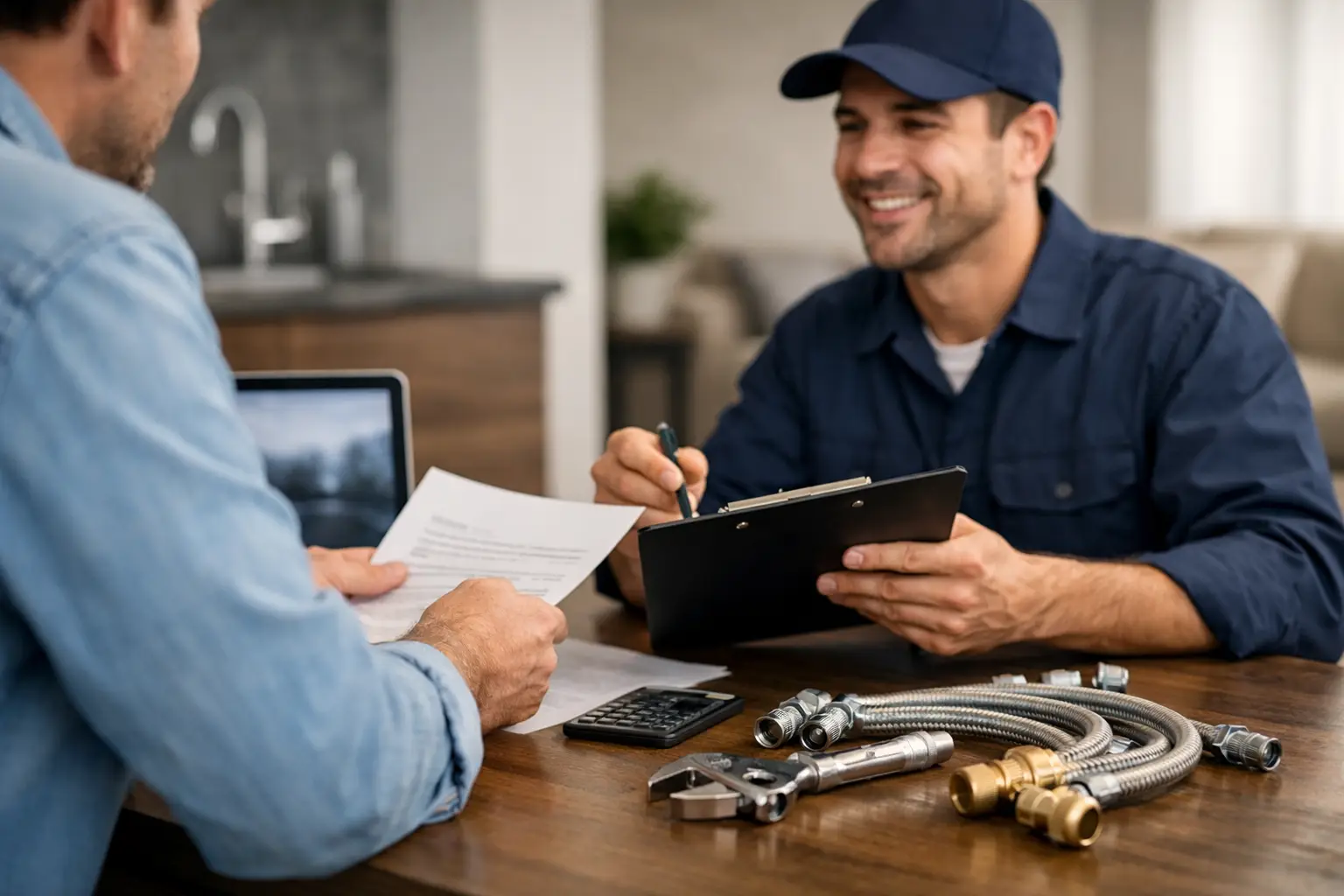
A dripping tap is one thing. A leaking pipe under the floor, no hot water or a blocked drain is another. Knowing how to get plumbing quotes properly helps you act quickly without agreeing to work you do not understand or paying for surprises later.
The best quote is not automatically the lowest one. It is the one that clearly explains the work, uses a suitably qualified local plumber and gives you enough detail to compare like for like. Whether you are a homeowner, tenant, landlord or property manager, a little preparation can make the process faster and safer.
Start with a clear description of the job
Plumbers can only price accurately when they understand the problem. Before requesting quotes, write down what has happened, when it started and what you have already noticed. For example, say whether a boiler is showing an error code, a radiator is cold at the bottom, a toilet is constantly running, or water is coming through a ceiling below a bathroom.
Photos and short videos are useful for visible issues such as leaks, damaged pipework, faulty taps and shower problems. Include the location of the issue, the type of property and whether you can access the relevant area easily. If the plumber may need to inspect a loft, under-floor void or communal riser, say so at the outset.
For planned work, be specific about what you want supplied and fitted. “Replace the bathroom taps” could mean a straightforward swap, or it could involve changing pipework, isolating the water supply and repairing tiles. If you have already chosen fittings, share the make and model. If you have not, ask the plumber to quote for suitable options at different price points.
A clear brief reduces guesswork. It also makes it much easier to compare the plumbing quotes you receive.
Know when a fixed quote is realistic
A fixed quote gives an agreed price for a defined piece of work. It is usually appropriate for jobs such as replacing a tap, fitting a radiator, installing a toilet, repairing a visible leak or replacing a section of accessible pipe.
Some problems cannot be priced with certainty before an inspection. A blocked drain may have a simple cause, but it could also involve a collapsed pipe or a deeper obstruction. A leak behind a wall may require investigation before the full repair is known. In these cases, a plumber may charge a diagnostic or call-out fee, then provide a quote once they have identified the fault.
That is not necessarily a warning sign. What matters is that the plumber is clear about the initial cost, what it covers and what happens next. Ask whether the investigation fee will be deducted from the repair cost if you proceed.
For urgent work, the priority is often stopping damage or restoring essential services. You may need to authorise an emergency visit before collecting several quotes. Ask for the hourly rate, minimum charge, out-of-hours uplift and estimated parts cost before the plumber attends where possible. Once the immediate issue is safe, request written costs for any further work.
How to get plumbing quotes you can compare
Aim to obtain two or three quotes for non-emergency work. More is not always better. If you request too many, you can lose time and still end up comparing vague estimates. Focus on trusted local tradespeople who are available, suitably experienced and willing to set out the job clearly.
Give every plumber the same information. If one has been asked to supply a new cylinder and another has only been asked to install one you bought yourself, the figures will not be comparable. The same applies to materials, access, disposal and making good after the work.
A useful written quote should state:
- the labour and materials included;
- the scope of work and any exclusions;
- whether VAT applies;
- the expected start date and likely duration;
- payment stages or deposit requirements; and
- the warranty or guarantee offered on workmanship and supplied parts.
For larger projects, such as a bathroom refit, central-heating upgrade or kitchen plumbing, ask for an itemised breakdown. This does not need to account for every washer and screw, but it should show the main labour, materials and installation costs. It gives you a clearer basis for discussing alternatives if the price is beyond your budget.
Be cautious with a figure given only by text or over the phone for a job that needs inspection. An estimate can be helpful as an early guide, but it is not the same as a detailed quote. Confirm which one you are receiving.
Check the plumber, not just the price
Plumbing covers a wide range of work. A professional who is excellent at bathrooms may not be the right person for a complex heating fault. If the work involves a gas boiler, cooker or gas pipework, the engineer must be Gas Safe registered and qualified for that type of appliance. Ask to see their registration details and check they cover the work required.
For any plumber, look for evidence of relevant experience, clear communication and recent customer feedback. You are inviting someone into your home or managing a property on behalf of others, so trust matters as much as technical ability. Verified profiles and local reviews can help you narrow down the options before arranging visits.
It is also reasonable to ask whether the plumber has public liability insurance, particularly for substantial installations or work in a tenanted property. A reputable tradesperson should not be offended by sensible checks.
VeriTrade UK helps homeowners and property managers find trusted local tradespeople, making it easier to start with professionals who are relevant to the job and area.
Ask about exclusions before accepting
Costly disagreements often begin with assumptions. A quote to fix a leak may cover repairing the pipe but not replacing a damaged ceiling below it. A quote to fit a shower may not include electrical work, tiling, boxing in pipework or removing old fittings unless these are listed.
Read the exclusions as carefully as the inclusions. Ask who is responsible for isolating water supplies, moving furniture, protecting floors, parking charges and waste removal. In a flat, check whether building management approval is needed before work starts, especially where shared pipework or water shut-offs are involved.
If the job could uncover hidden damage, ask how variations will be handled. A fair approach is for the plumber to stop, explain the issue, provide the additional cost and get your approval before continuing. Put this agreement in writing, even if it is only a message confirming the revised scope and price.
Understand deposits and payment schedules
Small repairs are commonly paid when the work is complete. For larger jobs, a deposit may be reasonable to cover booked time or ordered materials. The amount should make sense for the project and be tied to a clear payment schedule.
Avoid paying the full cost upfront. Instead, agree stages that reflect genuine progress, such as materials ordered, first-fix work completed and final installation tested. Keep invoices, quotes and messages together. They provide a useful record of what was agreed if questions arise later.
Before making the final payment, check that the work is complete, the system has been tested and you have any relevant paperwork. For boiler or heating work, make sure you understand the controls and know what documentation you should retain.
What to do when quotes differ widely
A large gap between prices does not always mean someone is overcharging or undercharging. One plumber may have included higher-quality materials, more time for access issues or remedial work that another has excluded. Another may have misunderstood the brief.
Go back with focused questions. Ask each plumber to confirm the materials, labour, disposal, VAT and warranty included. If one quote is much lower, ask what has not been allowed for. If one is much higher, ask whether there is a practical alternative that still meets the required standard.
Do not choose based on pressure, vague promises or a price that seems too good to be true. The right plumber will explain the work in plain English, answer reasonable questions and give you a clear route to proceed.
A well-prepared request and a detailed written quote protect both sides. You get a clearer view of the cost and timescale, while the plumber can arrive ready to do the job properly. That is the best starting point for work that lasts.