
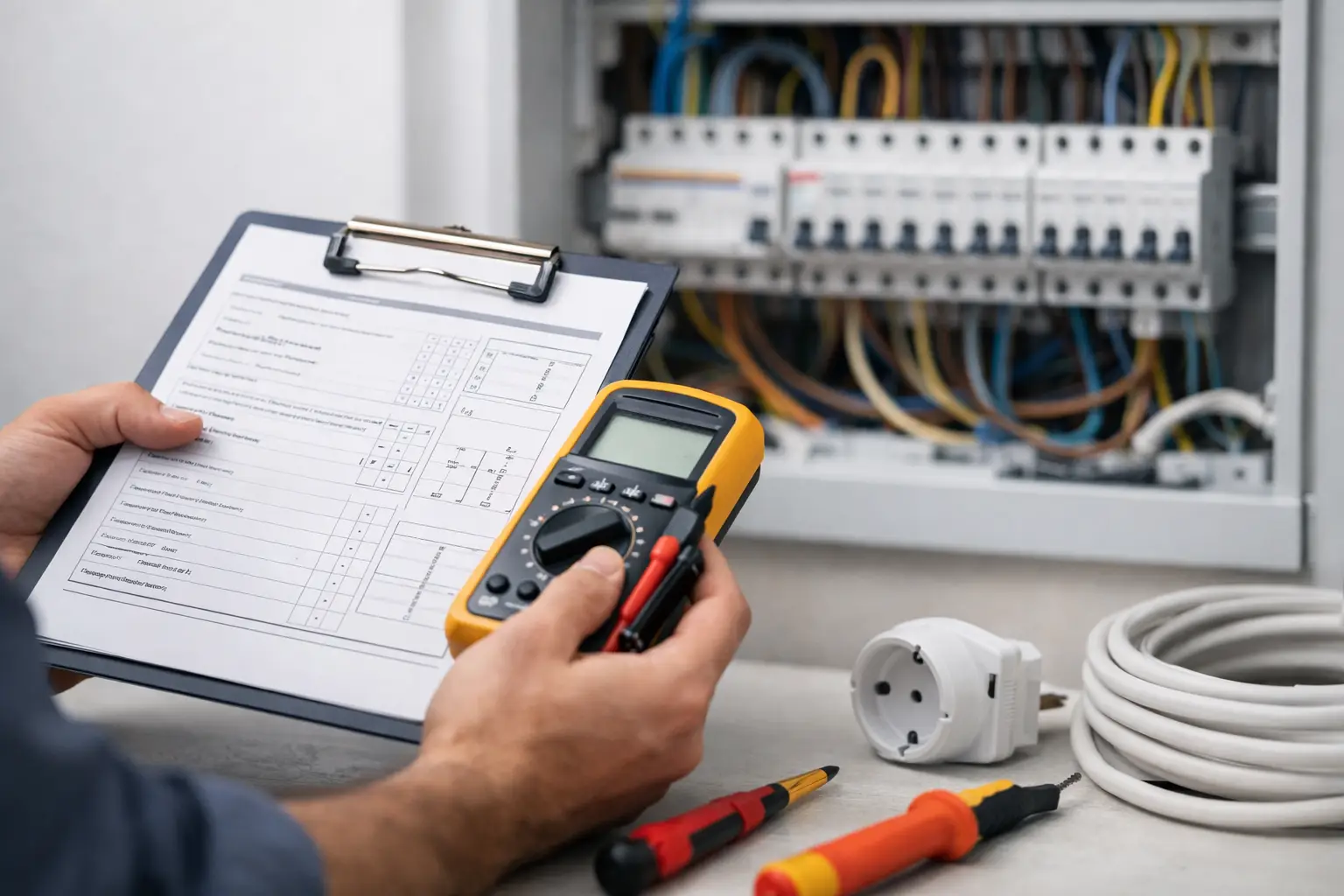
A new consumer unit, an extra socket or a worrying flicker can all leave you with the same question: what paperwork should you receive? This guide to electrical safety certificates explains what each document means, when you need one and how to make sure the work in your property has been checked properly.
Electrical paperwork is more than an admin task. It creates a record of what was inspected or installed, highlights safety issues and gives landlords, homeowners and future buyers clearer evidence that electrical work has been handled by a competent professional.
What are electrical safety certificates?
“Electrical safety certificate” is a useful catch-all term, but different jobs require different documents. The most common are an Electrical Installation Condition Report, an Electrical Installation Certificate and a Minor Electrical Installation Works Certificate.
Each serves a different purpose. An inspection report assesses the condition of existing electrics. Installation certificates confirm that new work has been designed, installed and tested. Understanding the distinction matters, particularly if you are a landlord trying to meet legal duties or a homeowner planning a larger renovation.
Electrical Installation Condition Report (EICR)
An EICR is often called a landlord electrical safety certificate, although technically it is a report. A qualified electrician tests the fixed electrical installation in a property, including the consumer unit, circuits, sockets, switches, earthing and bonding where accessible.
The electrician records observations using standard codes. C1 means danger is present and urgent action is required. C2 means potentially dangerous and remedial work is needed. FI means further investigation is required without delay. A C3 observation identifies an improvement that is recommended but does not, by itself, make the report unsatisfactory.
The outcome will be marked satisfactory or unsatisfactory. An unsatisfactory EICR does not automatically mean every part of the installation must be replaced. It means the faults identified need to be addressed. Once remedial work is complete, ask for written confirmation or the appropriate certificate for that work.
Electrical Installation Certificate (EIC)
An Electrical Installation Certificate is normally issued for new electrical installation work, such as a full or partial rewire, a replacement consumer unit, or a newly installed circuit. It confirms that the work has been inspected and tested and that it meets the requirements applicable at the time it was carried out.
This certificate should describe the installation, list test results and identify who designed, installed and inspected the work. Keep it with your property records. It can be useful when selling, refinancing, making an insurance claim or arranging later alterations.
Minor Electrical Installation Works Certificate
For smaller additions or alterations to an existing circuit, an electrician may issue a Minor Electrical Installation Works Certificate. Typical examples include adding a socket outlet, installing a new light fitting circuit extension or fitting an extractor fan from an existing circuit.
It is not appropriate for major work such as a new circuit or consumer unit. The correct paperwork depends on the scope of the work, not simply how long the job takes.
When do you need an electrical safety certificate?
The answer depends on the property, the work and who occupies it. For private homeowners, there is generally no blanket legal requirement to obtain an EICR at a fixed interval. However, regular inspection is sensible, especially in an older home, after major building work, before buying a property or when you notice recurring electrical problems.
Common industry guidance is to have an owner-occupied home inspected around every 10 years, or on a change of occupancy. But this is not a substitute for professional advice. The previous report may recommend a shorter interval, and properties with ageing wiring, extensive DIY alterations or high electrical demand may need closer attention.
Landlords have more specific responsibilities. In England, private landlords must ensure the electrical installation is inspected and tested at least every five years by a qualified and competent person. They must provide a copy of the report to existing tenants within 28 days, give it to new tenants before they move in, and retain it for the next inspection.
Rules differ across the UK. Wales and Scotland have their own landlord safety requirements, while houses in multiple occupation can involve additional obligations. If you manage property in more than one nation, check the rules for the property’s location rather than relying on an England-only checklist.
Electrical work and Building Regulations
A certificate and Building Regulations compliance are related, but they are not the same thing. Certain electrical work in homes is notifiable under Part P of the Building Regulations in England and Wales. This can include work such as a new circuit or consumer unit, with particular requirements in special locations such as bathrooms.
Where the electrician is registered with a recognised competent person scheme and the work is within their scope, they can usually notify the work themselves. You should then receive your electrical certificate and, where required, Building Regulations compliance paperwork.
If the work is not self-certified, it may need to be notified through local authority Building Control. Ask this question before work starts. Sorting it out afterwards can be time-consuming and may complicate a property sale.
What happens during an EICR?
An EICR is not just a visual check. The electrician will inspect accessible parts of the installation and carry out testing to assess whether protective devices, earthing arrangements and circuits are operating as intended. This may require temporary power isolation, so plan around refrigeration, internet equipment, alarms and anyone working from home.
The visit can take a couple of hours for a small flat or much longer for a larger or older property. Access has a direct effect on the quality of the inspection. Locked rooms, inaccessible consumer units and concealed faults may limit what can be tested. A good electrician will explain any limitations clearly in the report rather than making assumptions.
Do not choose solely on the lowest advertised EICR price. A very cheap inspection can lead to rushed testing, unclear reports or unexpected pressure to approve costly remedial work on the spot. Get clarity on the property size, number of consumer units, whether testing is included and how observations will be explained.
How to choose the right electrician
For inspection and certification work, you need more than someone who is generally handy with electrics. Look for an electrician with relevant qualifications, appropriate insurance and experience of the type of property or job involved. For notifiable domestic work, ask whether they are registered with a competent person scheme and whether they will handle notification where needed.
Before confirming the booking, ask what certificate or report you will receive, when it will be issued and whether the quoted price includes a digital or printed copy. If an EICR identifies defects, request an itemised quote for repairs. You are free to use another qualified electrician for remedial work, particularly where you want a second opinion on major recommendations.
For homeowners, landlords and property managers, using a trusted local tradesperson makes the process easier. VeriTrade UK helps you find verified professionals for electrical inspections, repairs and installation work in your area.
Keep your paperwork where it can be found
Store EICRs, installation certificates, remedial-work records and any Building Regulations compliance documents together. A digital folder is practical, but retain original paperwork where possible. Record the inspection date, recommended next inspection date and the contact details of the electrician who completed the work.
This record is particularly valuable when a tenant reports a fault, an electrician needs to understand previous alterations or a buyer asks for evidence during a sale. It also prevents the common mistake of paying for a new inspection because earlier certificates have been misplaced.
A practical guide to electrical safety certificates for landlords
For landlords, the priority is not just obtaining a satisfactory report once. It is keeping the installation safe between inspections. Respond quickly when tenants report tripping circuits, warm sockets, burning smells, damaged fittings or electric shocks. These are not issues to leave until the next scheduled EICR.
Give tenants the report when required and keep evidence that it was provided. If remedial work is needed, arrange it promptly and retain the paperwork showing what was done. A report that identifies a fault is useful only if it leads to action.
The right certificate gives you a clear starting point, not a false promise that nothing can go wrong. Keep an eye on warning signs, keep the documents organised and bring in a qualified local electrician whenever the condition of the installation is in doubt.