
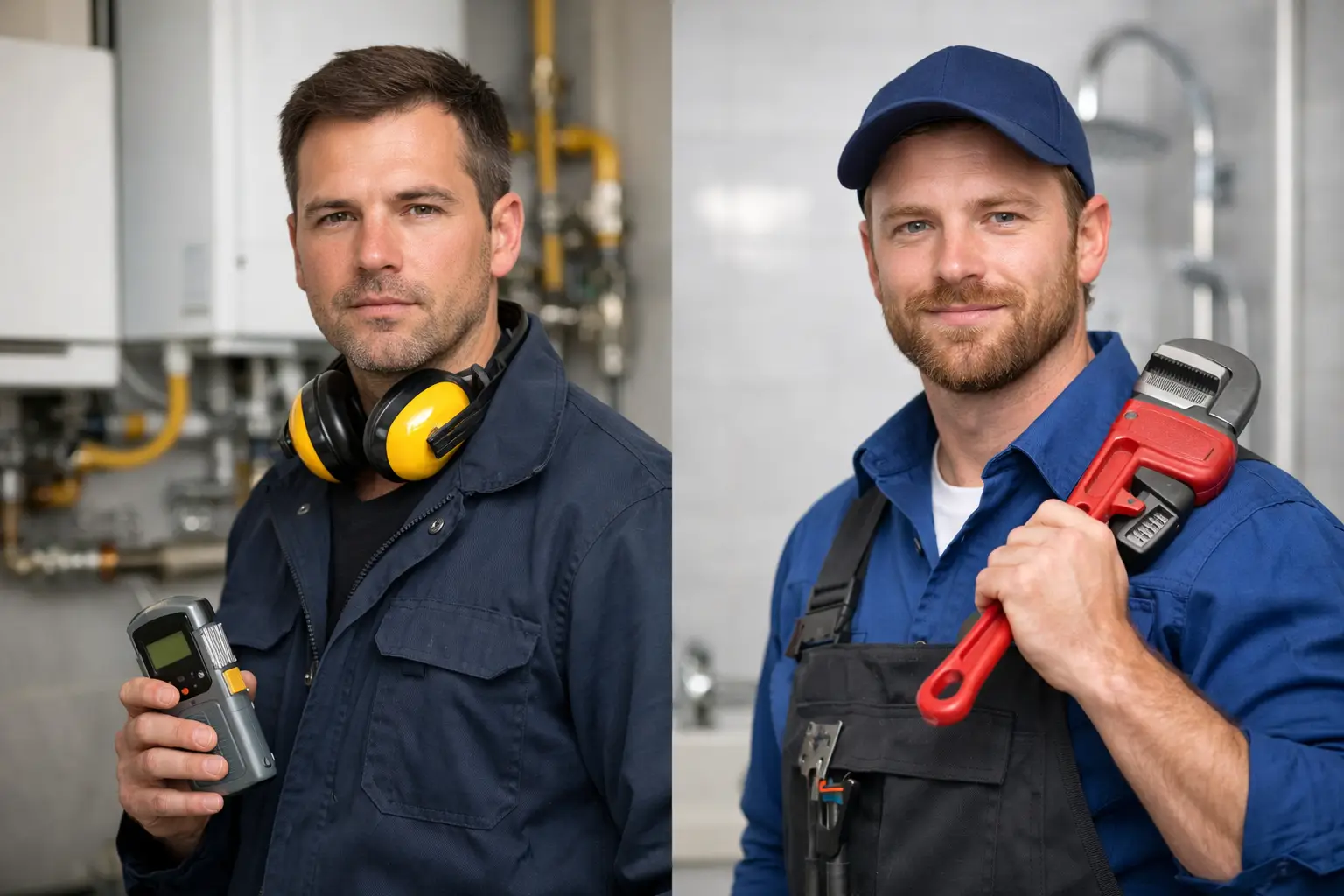
A leaking radiator and a boiler that will not fire up can look like one problem. The person you need may not be the same, though. In the gas engineer versus plumber decision, getting it right protects your home, avoids wasted call-out costs and, where gas is involved, keeps everyone safe.
For many everyday water jobs, a plumber is the right first call. For any work that involves a gas appliance, gas pipework or its safe operation, use a suitably qualified Gas Safe registered engineer. Some tradespeople do both, which can be particularly useful when a fault crosses between plumbing and heating.
Gas engineer versus plumber: the key difference
A plumber works on water supply, drainage, sanitaryware and many parts of a heating system. They may repair a dripping tap, replace a toilet cistern, clear a blocked waste pipe, fit a shower or resolve a leak beneath a kitchen sink. Their work is centred on moving water into, around and out of a property.
A gas engineer is trained and registered to work safely on gas appliances and gas pipework within the scope of their qualifications. This can include gas boilers, cookers, hobs, fires and central-heating controls connected to a gas boiler. They diagnose combustion and safety issues that are outside the scope of general plumbing work.
The distinction matters because gas work is regulated. By law, anyone carrying out gas work for payment must be on the Gas Safe Register and qualified for the specific appliance or type of work involved. Being an experienced plumber does not, on its own, permit someone to repair a gas boiler or connect a gas cooker.
The overlap can be genuine
Heating systems bring both trades together. A central-heating problem could be caused by a water leak, a stuck valve, poor system pressure, a failing pump, a boiler fault or a control issue. A plumber with heating experience may be able to deal with pipework, radiators and water-side faults. If the cause sits inside the gas boiler, a Gas Safe registered engineer is needed.
Many local professionals describe themselves as heating engineers, gas engineers and plumbers because they hold the relevant skills and registrations. Do not assume this from the job title alone. Ask what work they are qualified to undertake and check their current Gas Safe registration before gas work starts.
When to call a plumber
A plumber is usually the best fit when the issue is about water, drainage or fixtures rather than an appliance burning gas. Common examples include a burst or leaking pipe, a tap that will not stop dripping, low water pressure at an outlet, a blocked sink, shower or toilet, and a faulty toilet flush.
They are also well placed for replacing basins, baths, taps, showers, toilets and waste pipes. If a radiator is leaking from a valve or a pipe joint, a plumber may be able to repair it, drain the affected section and restore system pressure. For non-gas systems, such as an electric shower or some unvented hot-water arrangements, the precise competence needed depends on the equipment and the work involved.
Before booking, describe the symptoms rather than trying to diagnose the fault. Tell the tradesperson where the leak is, whether water can be isolated, and whether the issue affects one room or the whole property. Clear details help them bring suitable parts and give a more realistic indication of the work.
When you need a gas engineer
Book a Gas Safe registered engineer if your gas boiler has stopped working, displays a fault code, loses pressure repeatedly without an obvious external leak, makes unusual noises or produces no heating or hot water. The same applies to boiler servicing, boiler installation, flue work, gas pipe alterations and gas cooker or hob installation.
A gas engineer should also investigate a pilot light that repeatedly goes out, a suspected carbon monoxide concern, soot marks near an appliance, or a gas fire that is not operating correctly. These are safety matters, not jobs to postpone until a convenient time.
If you smell gas, suspect a gas leak or feel unwell with symptoms that could be linked to carbon monoxide, act immediately. Turn off the gas supply at the meter only if it is safe to do so, open doors and windows, avoid flames and electrical switches, leave the property, and contact the gas emergency service on 0800 111 999. Do not attempt a repair yourself or wait for a routine appointment.
Boiler servicing is not ordinary plumbing
A boiler service involves safety checks, inspection and testing that must be carried out by a suitably qualified Gas Safe registered engineer. It helps identify wear, combustion issues and faults before they become a breakdown or safety risk. For landlords, an annual gas safety check and Gas Safety Record are legal requirements for relevant rented properties.
Homeowners also benefit from keeping service records. They can support warranty conditions and give a new engineer a useful history if a problem develops later. A cheap appointment is poor value if the person attending cannot legally complete the required checks.
How to choose the right professional
The fastest way to avoid confusion is to match the trade to the work, then verify the credentials. For plumbing repairs, look for a local professional with relevant experience, clear communication and evidence of reliable work. For gas work, confirm the engineer is Gas Safe registered and qualified for your particular appliance type.
Do not rely solely on a logo on a van, an old certificate or a profile description. Ask to see the engineer's Gas Safe ID card when they arrive. It shows their registration status and the categories of gas work they are qualified to carry out. An engineer qualified for boilers may not necessarily be qualified for every type of appliance.
For planned work, request a written quote that sets out labour, materials, VAT where applicable and any assumptions. For emergency work, ask about the call-out charge, hourly rate, minimum charge and whether parts are included before authorising work where circumstances allow. The lowest price is not always the lowest final bill, particularly if an incorrect diagnosis leads to a second visit.
It is sensible to ask what happens if the repair reveals a larger fault. A trustworthy professional will explain the options in plain language, including whether a repair is safe and economical or whether replacement should be considered. They should not pressure you into a decision you do not understand.
What to tell the tradesperson before they arrive
A useful job description saves time for both sides. Include the appliance make and model if you have it, any error code, when the problem began and what has changed. For leaks, say whether water is still flowing, whether you have shut off the stopcock, and whether ceilings, electrics or neighbouring properties could be affected.
Photos and short videos can help with visible plumbing problems. They may not reveal the root cause, but they can help a professional assess urgency and prepare for the visit. Never remove boiler casing panels or interfere with gas connections to obtain a better photograph.
Tenants should report faults promptly to their landlord or managing agent, especially loss of heating, hot water, water leaks and all suspected gas issues. Landlords and property managers should keep a clear record of reports, attendance, safety documentation and repairs. This protects the property and provides reassurance to everyone living there.
For tradespeople: make your scope clear
For plumbing and heating businesses, clear service descriptions bring better-matched enquiries. State whether you cover emergency leaks, bathroom plumbing, radiator repairs, boiler servicing, boiler breakdowns or gas appliance installation. If you are Gas Safe registered, present that status accurately and keep your qualifications current.
Being specific also protects your time. A homeowner looking for a blocked drain needs a different response from a landlord needing an annual gas safety check. Verified local trade platforms such as VeriTrade UK can help customers find professionals whose skills match the job, while helping tradespeople receive relevant work in their area.
A safe choice starts with the right question
You do not need to know every valve, fault code or heating-system component before asking for help. Start with one simple question: does this work involve gas or a gas appliance? If it does, choose a qualified Gas Safe registered engineer. If it is water, drainage or a fixture issue, a capable plumber is often the right person. When the fault involves both, choose a professional who can clearly show they are qualified for the full job.