
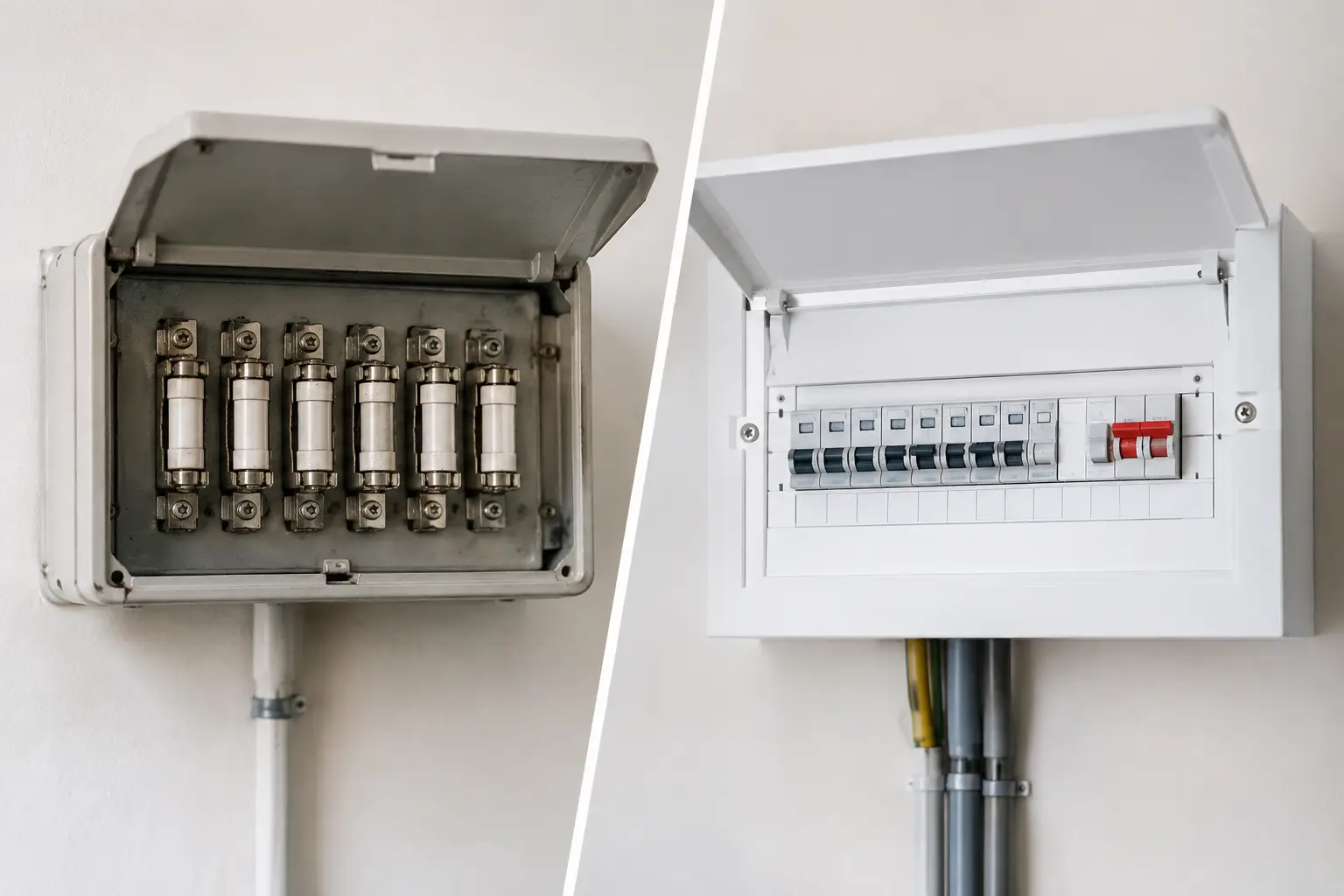
A fuse box versus consumer unit is not simply a question of old versus new. The unit that controls your home’s electricity can affect how quickly a fault is isolated, how well people are protected from electric shock and whether electrical work can be safely extended in future. If you have an older property, are planning a renovation or have noticed tripping circuits, it is worth knowing what is behind the cover.
For homeowners, landlords and property managers, the practical rule is simple: never remove the cover or try to alter electrical protection yourself. A qualified electrician can inspect the installation, explain what is fitted and advise whether repair, testing or replacement is the right next step.
Fuse box versus consumer unit: what is the difference?
A fuse box is the older name commonly used for the board that distributes electricity around a property. Traditional versions contain rewireable fuses, often with coloured fuse wire, or cartridge fuses. When a circuit is overloaded or develops a fault, the fuse is designed to break the circuit by melting.
A consumer unit is the modern term for the same central point of distribution, but it usually uses resettable protective devices rather than replaceable fuse wire. It is sometimes called a fuse board in everyday conversation. Modern consumer units typically include miniature circuit breakers, known as MCBs, and residual current devices, known as RCDs. Many new installations use RCBOs, which combine both forms of protection for individual circuits.
The difference matters because a modern board can give more targeted protection and make faults easier to identify. If a circuit trips, you can often see which breaker has operated, switch off appliances on that circuit and reset it once the cause has been dealt with. With a rewireable fuse, the correct fuse wire must be fitted before power can be restored. Using the wrong rating is dangerous.
That said, age alone does not prove an installation is unsafe. A well-maintained older fuse box may still be serviceable, while a newer consumer unit can have problems if it was poorly installed, damaged or not tested. The condition of the wiring, earthing, bonding and protective devices all need to be considered together.
How a modern consumer unit improves protection
An MCB protects cables from overload and fault current. For example, it may trip if too many high-demand appliances are used on one circuit or if there is a fault in an appliance or cable. Unlike an old fuse, it can normally be reset once the fault has been found.
An RCD adds protection against electric shock by monitoring the balance of current flowing through a circuit. If it detects current leaking to earth, it disconnects the supply very quickly. This is particularly relevant where electricity and water may meet, such as kitchens, bathrooms and outdoor areas, although RCD protection is used much more widely in modern installations.
RCBOs provide similar RCD protection on a circuit-by-circuit basis. Their main advantage is reduced disruption. On an older split-load consumer unit, a single fault can sometimes cut power to several circuits. With RCBOs, a fault on the downstairs socket circuit is less likely to switch off lights, the fridge or an upstairs circuit at the same time.
Some new consumer units may also include surge protection devices, or SPDs. These help protect connected equipment from electrical surges, such as those associated with the electricity supply or nearby lightning activity. Arc fault detection devices are also available for particular applications, but they are not a standard requirement for every home. The right specification depends on the property, the circuits and the electrician’s assessment.
Signs your existing fuse box needs attention
A board does not need to look modern to be safe, but certain signs justify a prompt inspection. Regular tripping, burning smells, buzzing, scorch marks, a warm cover, loose switches or flickering lights should not be ignored. Turn off power if it is safe to do so and arrange an electrician urgently, especially if there are signs of overheating.
Other situations are less urgent but still worth checking. You may need advice if your board has old rewireable fuses, no visible RCD test buttons, a cracked or missing cover, mixed and poorly labelled circuits, or a lack of spare capacity for an extension, electric shower, induction hob, heat pump or electric vehicle charger.
Do not assume that replacing a fuse with a larger one will solve a problem. A fuse or breaker trips because it is responding to a fault, overload or issue on the circuit. Repeatedly resetting a breaker without finding the cause can create a serious risk. Unplug portable appliances, note what was in use when the trip happened and tell the electrician exactly what you observed.
When replacement is the sensible option
Replacing a fuse box with a consumer unit is often recommended when an older installation lacks appropriate RCD protection, the board is damaged, circuits are being substantially altered or the property needs more capacity. It can also be sensible during a kitchen refit, extension or full rewire, when access is available and new circuits are already being installed.
However, a consumer unit replacement is not a cosmetic swap. Before fitting one, an electrician should assess the condition of the existing installation. Modern protective devices can reveal faults that an older board did not detect, including insulation resistance issues, poor connections or inadequate earthing arrangements. If the wiring is in poor condition, replacing the board alone may not be the complete answer.
The work should be designed around your actual needs. A small flat with a few straightforward circuits needs a different arrangement from a family home with an outbuilding, solar panels, an electric vehicle charger and a home office. Ask how circuits will be separated, whether RCBOs are suitable, what labelling will be provided and whether there is room for future additions.
Cost, disruption and compliance in the UK
The cost of replacing a consumer unit varies because the board itself is only one part of the job. The number of circuits, testing required, condition of the existing wiring, access, earthing upgrades and any remedial work can all affect the price. A quote based only on a photograph of the board may need to change after inspection.
There may be a short planned power cut while work and testing are carried out. Sensitive equipment should be shut down properly beforehand, and you should plan around refrigeration, internet equipment, alarms and medical devices. A professional electrician will explain the likely disruption before starting.
Consumer unit replacement is not suitable DIY work. It is notifiable electrical work in England and Wales, and it must be completed, tested and certified correctly. Requirements differ across the UK, so a competent local electrician can confirm the process for your property. Keep all certificates with your house records, as they can be useful for future sales, insurance queries and property management.
For private rented homes in England, landlords must arrange electrical safety checks at least every five years by a qualified person, with a report provided to tenants. An unsatisfactory report does not automatically mean every older board must be replaced, but any observations should be assessed and remedial work completed where required. Landlords elsewhere in the UK should check the rules that apply in their nation.
Questions to ask before hiring an electrician
Start by describing the problem rather than requesting a particular product. Say whether circuits are tripping, whether you are adding electrical equipment and whether the property has had recent electrical work. Clear information helps a tradesperson assess the likely scope.
Ask whether an inspection and testing visit is needed before a fixed quote, what protection the proposed consumer unit will include and whether any wiring faults could affect the final cost. You should also ask what certification will be supplied and how long the work is expected to take.
Choosing a trusted local electrician gives you a clear route from diagnosis to certified work. VeriTrade UK helps homeowners and property managers find verified local tradespeople when electrical work needs a reliable professional.
If your board is old but working, arrange an inspection rather than making assumptions. If it is showing signs of damage or repeated faults, treat it as a safety issue and get qualified help promptly.