
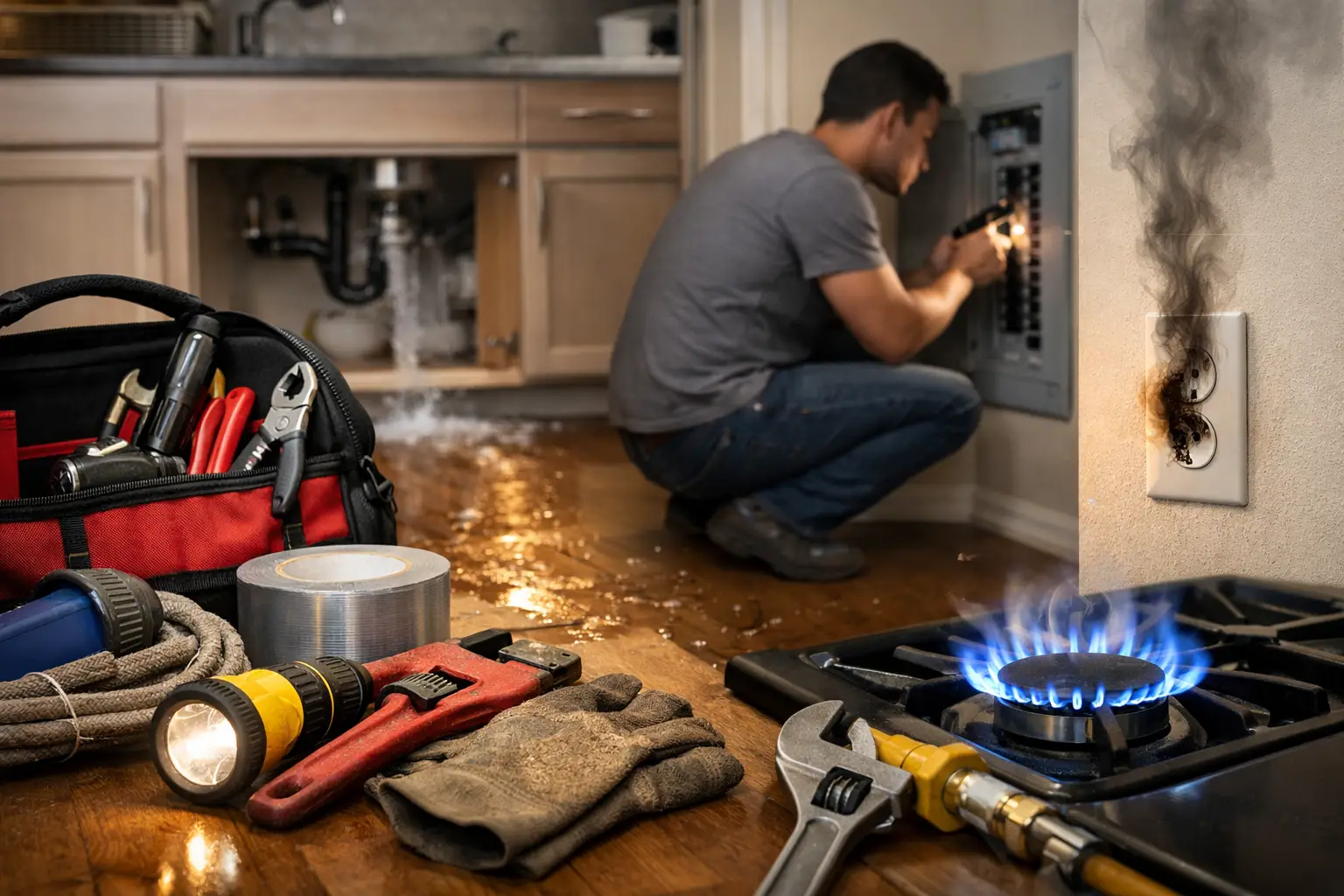
A burst pipe at 11pm, a power cut affecting only your home or the smell of gas can turn an ordinary evening into a stressful one. Emergency repairs are not simply about getting someone to attend quickly. The first priority is making the property safe, limiting further damage and choosing a competent local tradesperson for the job.
Acting calmly can save money, protect your home and reduce the chance of a small fault becoming a major claim. You do not need to diagnose the problem yourself. You do need to know what is safe to do while help is arranged.
When emergency repairs cannot wait
A repair is an emergency when it presents an immediate risk to people, the structure of the property or essential services. Flooding from a leaking pipe, a gas smell, exposed electrical wiring, a total loss of heating in freezing weather or a blocked toilet with no alternative are all situations that usually need urgent action.
Not every inconvenient fault needs an out-of-hours call-out. A dripping tap, a single radiator that is not heating, a damaged cupboard door or a slow-draining sink can normally wait for a standard appointment. The distinction matters because emergency attendance often costs more, particularly at night, weekends and bank holidays.
Use the likely consequences as your guide. If waiting until the next working day could cause substantial water damage, create a safety hazard or leave the property uninhabitable, treat it as urgent. If the issue is contained and safe, take photos, make a note of what happened and arrange a local tradesperson during normal hours.
Make the situation safe before help arrives
Before calling for emergency repairs, take only the steps you can carry out safely. Do not remove electrical covers, interfere with gas appliances or attempt a repair that could make the situation worse.
For many household emergencies, a few practical actions can reduce damage:
- Turn off the water at the internal stopcock if a pipe, fitting or appliance is leaking heavily.
- Switch off electricity at the consumer unit if water is near sockets, wiring or electrical equipment, but only if you can reach it without stepping through water.
- Move valuables, rugs and furniture away from a leak where it is safe to do so.
- Catch small leaks with buckets and use towels to limit water spread.
- Open windows if you smell gas, avoid flames and electrical switches, leave the property, then contact the gas emergency service.
If there is a fire, a suspected carbon monoxide incident, serious structural danger or an immediate threat to life, call 999. A tradesperson is not a substitute for emergency services.
For water leaks, knowing the location of your stopcock is one of the most useful pieces of home knowledge you can have. It is often under the kitchen sink, near the front door, in a utility room or close to the water meter, but properties vary. Landlords and property managers should make sure tenants know where it is and how to use it.
The right trade for the fault
Speed matters, but sending the wrong person can cost time and money. Give a clear description of the problem so the job reaches the right professional.
A plumber is usually the first call for burst pipes, leaks, overflowing toilets, failed taps and problems with water supply. A heating engineer may be needed when a boiler has failed, particularly if there is no heating or hot water. For gas boilers, cookers and pipework, use an engineer who is qualified to work on gas appliances.
An electrician is the right choice for tripping circuits, burning smells from sockets, damaged wiring, sparking fittings or a loss of power that appears confined to your property. If your neighbours have also lost supply, check whether there is a wider network issue before booking a call-out.
A roofer or building professional may be needed after storm damage, a serious roof leak, a fallen fence creating danger or signs that part of the building has become unsafe. In these cases, temporary protection may be the immediate objective. A full repair can sometimes wait until conditions are safe and materials are available.
Describe what you can see, hear or smell, when it started, and whether you have already turned off water or power. Photos and short videos can help a tradesperson assess urgency before attending. They also create a useful record for landlords, managing agents and insurers.
How to choose a trusted emergency tradesperson
Urgency can make people vulnerable to poor workmanship, inflated prices and vague promises. That does not mean you should delay essential work to collect numerous quotes. It means you should make a quick, informed decision.
Ask whether the tradesperson can attend, what the call-out charge covers and whether there are additional hourly, materials or out-of-hours costs. A reputable professional should be able to explain their charging approach before travelling, although the final cost may depend on what they find on site.
For work involving gas, electrics or specialist systems, check that the person has the relevant qualifications for the job. Insurance and clear business details are sensible trust signals too. Be wary of anyone who insists on full payment before they have inspected the issue, refuses to discuss costs at all, or pressures you to approve major work immediately.
Sometimes the best emergency outcome is a safe temporary fix. For example, a plumber may isolate a faulty section of pipe overnight, or a roofer may install a temporary cover after storm damage. This can be the right approach when a permanent repair requires parts, dry weather or further investigation. Make sure you understand what has been made safe and what still needs to be completed.
Homeowners and property managers can use VeriTrade UK to find trusted local tradespeople when a repair needs attention. The aim is straightforward: reduce the uncertainty of finding someone credible when time is limited.
If you rent or manage a property
Tenants should report emergencies to their landlord or managing agent as soon as possible, following the emergency contact process in their tenancy agreement where one is provided. Keep a record of the call, message, photos and any steps taken to prevent damage.
If the landlord cannot be reached and the issue poses a real risk, arranging an emergency repair may be reasonable. However, avoid authorising non-essential upgrades or extensive works without agreement unless there is an immediate safety concern. The responsibility for payment can depend on the tenancy terms, the cause of the damage and whether the work was necessary.
Landlords should have a clear out-of-hours plan, especially for properties with older plumbing, shared systems or vulnerable occupants. Provide reliable contact details, keep records of safety checks and respond promptly to reports involving water, heating, electricity, gas or security. A delayed response to a genuine emergency can lead to higher repair costs and a far more difficult situation for everyone involved.
Protect the property after the immediate fix
Once the urgent danger has passed, do not assume the job is finished. Water damage can continue to show up behind skirting boards, beneath flooring and inside cupboards. Keep the affected area ventilated where possible, take further photos and watch for damp patches, swelling timber, mould or a persistent musty smell.
Ask the tradesperson what caused the fault, what was repaired and whether any follow-up work is recommended. A clear invoice should state the work completed and materials used. This is useful for warranty purposes, insurance claims and future maintenance.
If you intend to claim on home or landlord insurance, contact the insurer promptly and keep receipts for emergency attendance, drying equipment and temporary accommodation where relevant. Do not throw away damaged items or start major reinstatement work until you understand what evidence may be needed, unless it is necessary to make the property safe.
Reduce the chance of the next call-out
Some emergencies are unavoidable, especially during severe weather or when an older component fails without warning. Others are less likely when basic maintenance is kept up. Service heating systems as recommended, look for small leaks before winter, clear gutters, test smoke and carbon monoxide alarms, and avoid overloading sockets.
It also helps to save essential details before anything goes wrong: the stopcock location, consumer unit position, boiler model, landlord or agent contact, insurer details and a way to reach trusted local tradespeople. When a fault happens, having that information ready turns panic into a practical next step.
The right response to an emergency is rarely about fixing everything at once. Make the property safe, get the right professional involved and keep a clear record. That is how urgent repairs stay manageable, even when they arrive at the worst possible time.