
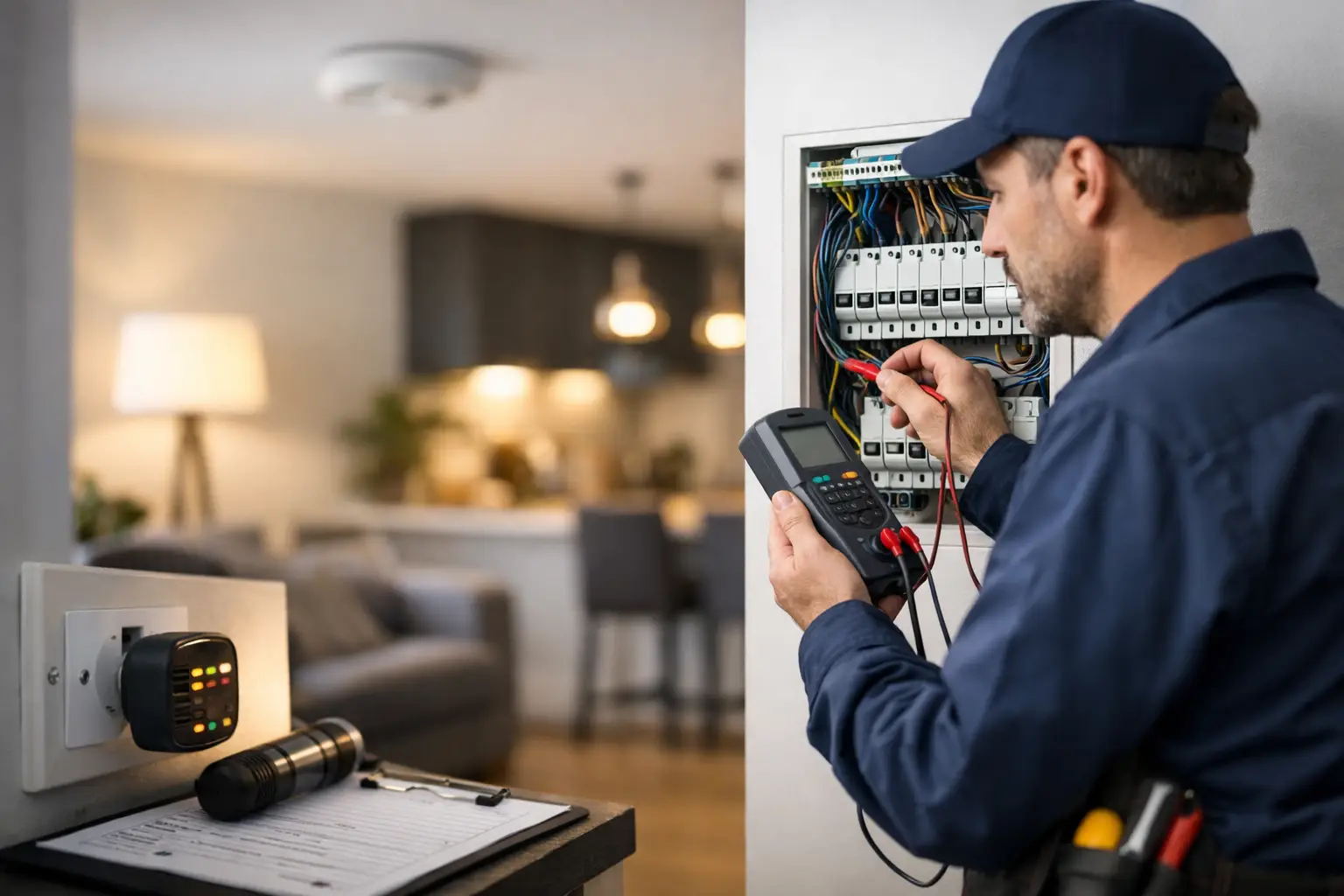
A consumer unit can look perfectly normal while faults sit behind sockets, under floorboards or inside ageing cables. Getting the electrical inspection frequency right is less about booking a visit on a fixed date and more about understanding how your property is used, who lives there and what has changed since the last check.
For homeowners, landlords and property managers, an Electrical Installation Condition Report, usually called an EICR, provides a clear record of the condition of a fixed electrical installation. It helps identify wear, unsafe alterations and issues that could create a shock or fire risk before they become an emergency.
How often should electrical installations be inspected?
A periodic inspection is carried out by a competent electrician who tests the fixed installation: the consumer unit, circuits, wiring, sockets, switches, earthing and protective devices. It is not the same as a quick visual check or a test of individual appliances.
For an owner-occupied home, the usual recommendation is an EICR at least every 10 years. Book one sooner when there is a change of occupancy, before buying a property where the electrical history is unclear, or after major electrical work. A home that has been extended, rewired in stages or altered by several previous owners deserves particular attention.
Rented property has tighter requirements. In England, private landlords must have the electrical installation inspected and tested at least every five years by a qualified and competent person. A copy of the report must be supplied to tenants and retained for the required period. Houses in multiple occupation generally also require checks at least every five years. Requirements in Scotland, Wales and Northern Ireland can differ in detail, so landlords should check the current rules that apply where the property is located.
The report itself may recommend a shorter interval. That recommendation matters. An older installation, a property with heavy use, or one exposed to moisture, heat or damage may need more frequent testing than the standard maximum period.
When to arrange an EICR before the next due date
Waiting for the next scheduled inspection is not always the safest or most practical choice. Changes to the property can affect the condition of the installation, even if it passed previously.
Arrange an electrician to assess the installation promptly if you notice repeated tripping, burning smells, warm sockets or switches, tingling from metal fittings, flickering lights, damaged cables, cracked accessories or signs of water ingress. These are warning signs, not issues to watch and wait on. If there is an immediate risk, switch off the affected circuit if it is safe to do so and call an emergency electrician.
An inspection is also sensible after flooding, a fire, rodent damage, storm damage or a serious leak. Water and electrics are a poor combination, and drying out a room does not prove that cables, connections or protective devices remain safe.
Landlords should not assume a change of tenant automatically means the previous EICR is invalid. The legal five-year period may still apply. However, a change of occupancy is a useful point to review the report, check for damage and confirm that any recommended remedial work has been completed. If the property has had alterations, heavy tenant use or no clear paperwork, an earlier inspection can reduce uncertainty.
Renovations and extensions
New circuits, consumer unit replacements, extensions, loft conversions, kitchens and bathrooms often involve electrical work. That work should be designed, installed, inspected and certified properly when completed. The relevant document may be an Electrical Installation Certificate or a Minor Electrical Installation Works Certificate rather than a full EICR.
Keep every certificate with the property records. Good paperwork helps an electrician understand what has been changed, makes a sale or tenancy handover easier and avoids paying for unnecessary investigative work later. If work was completed without certification, or you are unsure who carried it out, book an inspection rather than relying on appearances.
What affects electrical inspection frequency?
The age of a property is one factor, but it is not the whole story. A well-maintained older home with updated wiring may be in better condition than a newer property that has had poor-quality alterations.
Usage matters too. A family home with standard domestic demand is different from a rental with frequent occupants, a home office packed with equipment, or a property where electric heating, an EV charger, a hot tub or workshop machinery puts sustained demand on circuits. These additions do not automatically mean an installation is unsafe, but they should be installed on suitable circuits and recorded correctly.
Environmental conditions also change the risk. Garages, outbuildings, bathrooms, kitchens and areas affected by damp can need closer attention. Periodic checks are particularly worthwhile where cables may be exposed to impact, moisture or pests.
For commercial premises, there is no single inspection interval that suits every business. A quiet office and a busy workshop do not present the same risks. The appropriate frequency depends on the type of installation, condition, environment and level of use. A competent electrician can recommend an interval after assessing the site.
What happens during an electrical inspection?
An EICR usually begins with a visual assessment, followed by testing where it is safe and appropriate. The electrician checks for issues such as inadequate earthing, overloaded circuits, damaged accessories, outdated protective measures and signs of unsafe workmanship. Some circuits may need to be isolated temporarily, so it is worth asking in advance how long power could be interrupted.
At the end, you receive a report that records the results and any observations. These observations are commonly coded by urgency. C1 means danger is present and immediate action is required. C2 means a potentially dangerous condition needs urgent remedial work. FI means further investigation is required without delay. A C3 observation indicates improvement is recommended, but it does not by itself make the report unsatisfactory.
An unsatisfactory EICR is not a reason to panic, but it should not be filed away. Ask the electrician to explain which work is urgent, what can be planned and whether the affected circuit should remain in use. For rented homes in England, landlords must ensure remedial work or further investigation is completed within the required timescale, generally 28 days or sooner if the report specifies it.
Choosing the right electrician
The quality of an inspection depends on the person carrying it out. Look for an electrician who is competent to inspect and test, has suitable experience with the type of property, and provides a full written report. For notifiable domestic work, use someone able to handle the relevant certification and notification process.
Before agreeing a price, confirm what is included. A low quote may cover only a limited number of circuits or may not include the time needed to investigate faults. Give the electrician useful information upfront: the age of the property, previous certificates, known issues, recent renovations and whether there are solar panels, battery storage, an EV charger or outbuildings.
Homeowners and landlords can use VeriTrade UK to find trusted local tradespeople for electrical inspections, remedial work and urgent faults. Clear job details and available paperwork help the right electrician quote accurately and arrive prepared.
Keep records, not just reminders
The most useful approach to electrical safety is simple: retain the latest EICR, installation certificates, invoices and details of any remedial work in one place. Add a reminder before the next recommended inspection date, but do not let the calendar override common sense when something changes or warning signs appear.
A current report gives you more than a date in the diary. It gives you a clearer basis for maintaining a safe home, meeting landlord duties and choosing repairs before a small fault turns into a disruptive one.