
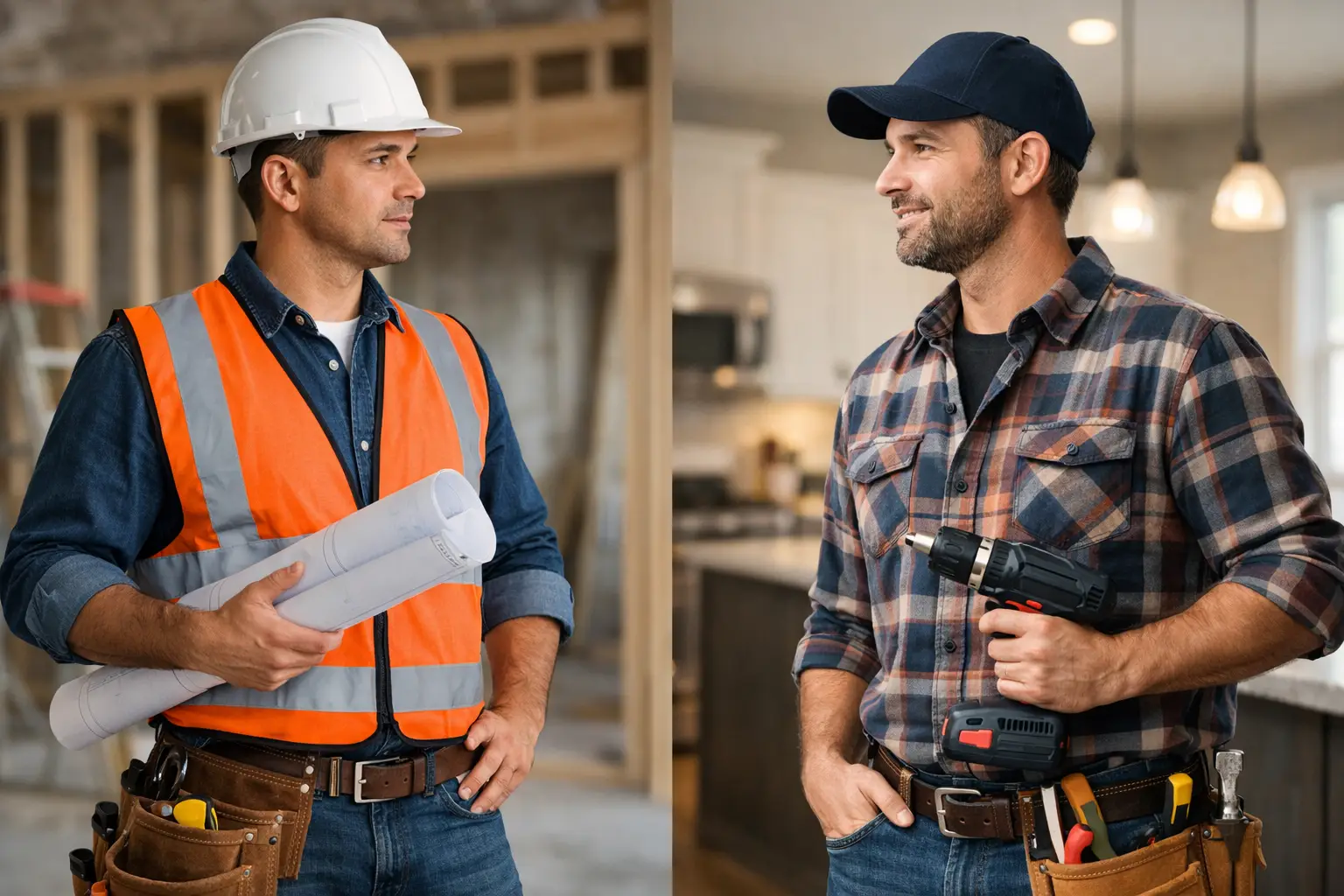
That loose kitchen cupboard, cracked garden wall or patch of damaged plaster can all look like “just a repair” until it is time to book someone. The real question is whether you need a builder or handyman for repairs, because hiring the wrong trade can mean wasted time, extra cost and work that still is not quite right.
For most property owners, the confusion comes from overlap. Both builders and handymen can fix things. Both may handle small jobs. Both might turn up with tools and a practical answer. But the type of repair, the level of skill needed and the risk involved matter far more than the job title alone.
Builder or handyman for repairs - what is the difference?
A handyman usually deals with general maintenance and straightforward repair work. Think of the jobs that need care, time and practical know-how but do not normally involve major structural work, specialist design or building control. That could include repairing doors, refitting skirting boards, resealing around a bath, replacing broken fence panels, patching plaster or assembling and fixing fitted items.
A builder is usually the better fit where the repair affects the structure, fabric or layout of a property. If a wall is failing, brickwork is cracked, a floor feels unstable, lintels need replacing or the repair forms part of wider renovation work, a builder is more likely to have the right experience. Builders also tend to manage more complex jobs involving multiple stages, materials or trades.
The simplest way to look at it is this: handymen are ideal for smaller, lower-risk repairs across the home, while builders are usually needed when the job is heavier, more technical or connected to the structure of the building.
When a handyman is the right choice
A good handyman can be the fastest and most cost-effective option for day-to-day property issues. This is especially true for landlords, busy homeowners and property managers who need a list of jobs sorted in one visit.
If the repair is cosmetic, minor or routine, a handyman often makes more sense. That includes fixing shelves, repairing damaged timber, rehanging gates, replacing silicone, mending small holes in walls, adjusting sticking doors, repairing shed panels or dealing with other general wear and tear.
This route also works well when the job does not require a specialist qualification. A handyman may be able to handle basic repair tasks across joinery, decorating and maintenance, but there is a line. If the work involves gas, significant electrical work or anything structural, you should not treat it as a general odd-job request.
Cost is another factor. Handymen often charge less than builders for smaller jobs, and many are set up for quick call-outs or half-day bookings. That makes them useful when you need practical help without the overhead of a larger building project.
When a builder is the better choice
Some repairs look small on the surface but point to a bigger problem underneath. That is where a builder earns their keep.
If you are dealing with cracked external walls, damaged pointing, subsidence concerns, sagging floors, failing steps, chimney issues or repairs after leaks that have affected the structure, a builder is the safer choice. The same applies if the repair needs brickwork, blockwork, concrete work or part-rebuilding.
A builder is also more suitable where the repair needs to match existing construction properly. For example, replacing a damaged section of wall is not just about filling a gap. It may involve load considerations, materials that match the original property and making sure the repair lasts through British weather.
There is also the question of scope. Once a repair starts to involve demolition, rebuilding, waste removal, multiple site visits or coordination with other trades, it moves away from handyman territory. At that stage, paying for building experience is often the cheaper decision in the long run.
The grey areas where it depends
This is where many people get stuck. Some jobs could be done by either trade, depending on complexity and the individual’s experience.
Take plaster repairs. A handyman may be fine for patching a small damaged area after a minor leak or accidental knock. But if entire sections are blown, damp has spread behind the finish or the wall itself needs remedial work, you may need a builder first and a plasterer after.
The same applies to tiling, fencing and brick repairs. A handyman might replace a few loose tiles, mend a short run of fence or repoint a very small area. A builder is the stronger option when the surface beneath has failed, the repair is extensive or the job affects stability.
This is why the smartest question is not simply “builder or handyman?” but “what is causing the damage, and what does it take to fix it properly?”
Cost matters, but so does risk
People often start with price, which is understandable. If the repair seems minor, you may not want to pay builder rates. But a lower quote only helps if the person is right for the job.
A handyman can offer better value for smaller repairs because you are paying for practical labour rather than specialist building capacity. For straightforward maintenance, that is often exactly what you need.
But when a repair is misdiagnosed, costs can climb quickly. Hiring a handyman for what turns out to be structural movement, water damage behind masonry or a failing external wall may only delay the proper fix. You then end up paying twice - once for the initial attempt and again for corrective work.
For landlords and property managers, that risk is even sharper. A cheap repair that fails between tenancies can create more disruption than booking the right trade from the start.
How to decide before you post the job
If you are unsure whether to hire a builder or handyman for repairs, start by looking at the job in three ways: size, risk and cause.
Size is the obvious one. Is this a quick repair that can be completed in one visit, or is it part of a larger issue? Risk is about what happens if the work is done badly. A loose shelf is inconvenient. A badly repaired step, wall or floor is a safety concern. Cause is often the deciding factor. Surface damage is one thing, but if the problem comes from damp, movement, rot or poor previous building work, you may need someone with stronger building experience.
Photos help, but clear details matter just as much. Describe where the damage is, how long it has been there, whether it is getting worse and if there are signs of deeper problems such as cracks spreading, water ingress or instability.
The better the job description, the easier it is to match with the right local trade.
What to ask before hiring
Whether you choose a builder or a handyman, do not rely on a vague promise that they can “sort it”. Ask what similar repair work they have done before. Ask whether they see any signs of a wider issue. Ask what is included in the quote, what materials will be used and whether the repair is expected to be temporary, cosmetic or long-lasting.
This matters because some repairs are really stop-gaps. There is nothing wrong with that if you know upfront. For example, a temporary patch may be reasonable in bad weather or before larger renovation works. Problems start when a short-term fix is sold as a full repair.
Trust also matters as much as technical fit. When someone is working in your home or on a managed property, you need confidence that they will turn up, communicate clearly and carry out the work to a proper standard. That is why many people prefer using a platform that helps them find trusted local tradespeople rather than relying on guesswork.
A practical rule of thumb
If the repair is small, visible and clearly limited to general maintenance, a handyman is often the right starting point. If the repair affects walls, floors, brickwork, stability, external fabric or anything that may have a deeper cause, speak to a builder.
And if you are still not sure, say that in the job request. A good marketplace such as VeriTrade UK makes that easier by helping homeowners and property managers connect with verified local trades who can assess the work properly rather than forcing a rushed choice.
Getting the right person first time is what saves money, hassle and repeat visits. The best repair is not always the cheapest quote or the quickest booking - it is the one that fixes the actual problem and lets you move on with confidence.