
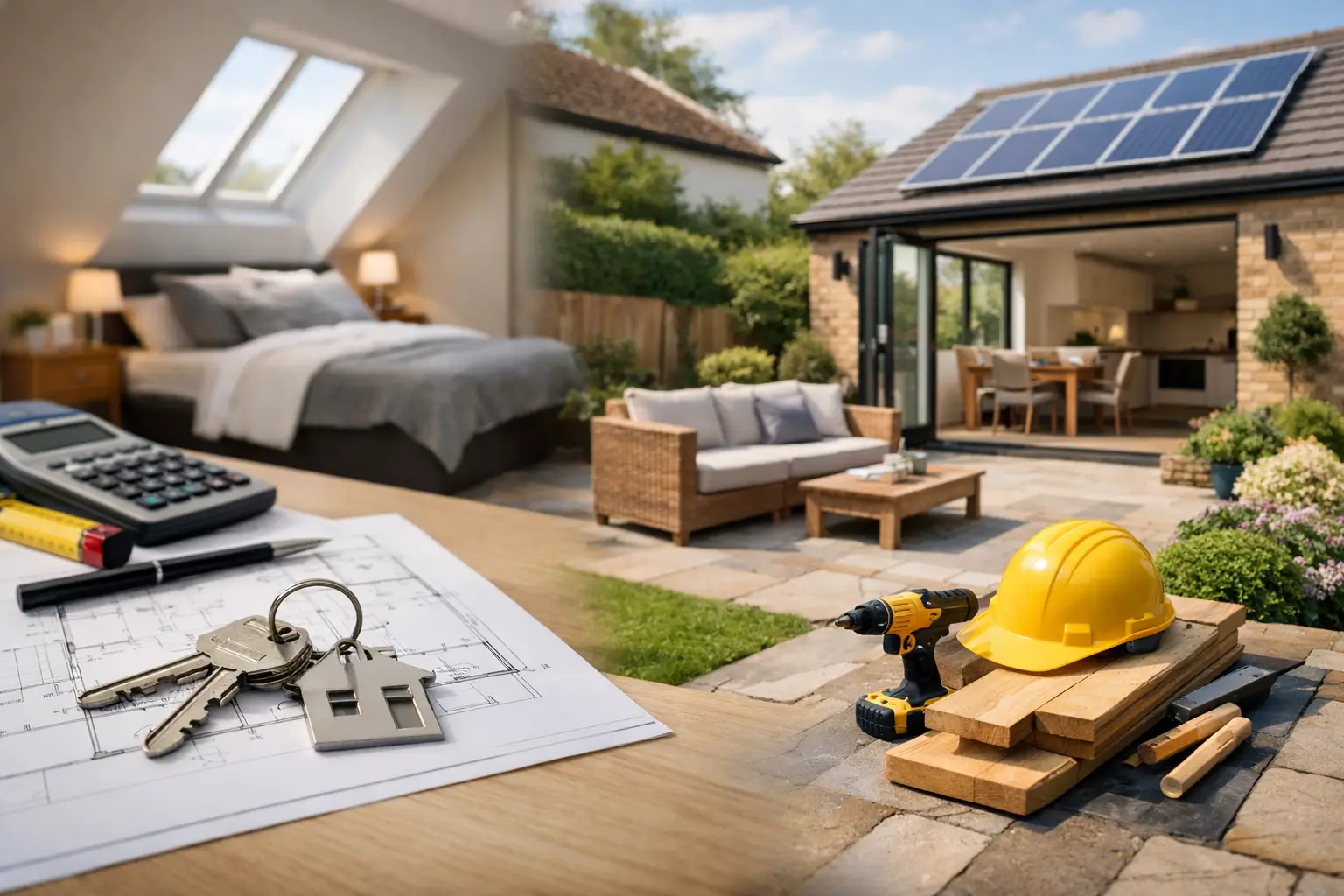
A buyer can forgive an outdated light fitting. They are far less likely to forgive a leaking roof, a damp patch or an electrical system that raises questions. The best improvements for property value are usually the ones that make a home feel sound, usable and cheaper to run before they make it look fashionable.
For homeowners, landlords and property managers, the right work depends on the property, its location and the likely buyer or tenant. A family house near good schools may benefit from extra living space. A city flat may gain more from a well-planned kitchen, better storage and lower running costs. The aim is not to spend the most. It is to remove the reasons people negotiate the price down.
Best improvements for property value: start with condition
Before planning a new kitchen or garden room, deal with essential repairs. Surveyors and buyers notice defects quickly, and unresolved issues can affect mortgage lending as well as confidence in the rest of the home.
Roof repairs, guttering, damaged brickwork, damp treatment, faulty windows, leaking plumbing and unsafe electrics should take priority. These jobs may not create the most dramatic before-and-after photographs, but they protect the building and stop smaller problems becoming expensive ones. Keep invoices, guarantees, certificates and records of any work completed. Clear documentation reassures buyers, tenants and managing agents that the property has been looked after properly.
For landlords, planned maintenance also reduces void periods and emergency call-outs. A reliable plumber, electrician or builder can identify risks early, before a tenant is left without heating or water. That is good property management and good value protection.
Do not hide problems with cosmetic work
Fresh paint over staining rarely solves the cause. If moisture, poor ventilation or a leak is behind it, the problem may return at the worst possible time - during viewings or after a survey. Fix the cause first, then make good the finish. A trusted local tradesperson can assess whether the work is minor repair work or a sign that further investigation is needed.
Improve energy performance where it makes sense
Energy costs remain a major concern for buyers and tenants. Improvements that reduce heat loss can make a property more comfortable, lower bills and improve its appeal, particularly in older UK housing stock.
Loft insulation is often one of the simpler places to start, provided the loft is dry and adequately ventilated. Draught-proofing around doors, windows and floorboards can also make a noticeable difference without a major refit. Where existing windows are failing, quality double glazing may be worthwhile, but replacing sound windows solely for appearance will not always deliver a matching increase in sale price.
Heating deserves a practical assessment too. An inefficient boiler, poor controls or radiators that do not heat properly can put people off. Upgrading controls, balancing the system or replacing an ageing boiler may be more sensible than fitting an expensive system that is unsuitable for the home. For major changes, consider the property’s insulation level, available space and likely running costs rather than following a one-size-fits-all recommendation.
Some energy upgrades can also affect compliance. Landlords should check the current energy efficiency requirements for rented homes before planning work. Buyers increasingly look at Energy Performance Certificate ratings, but the best result comes from improvements that genuinely make the home warmer and easier to run.
Make kitchens and bathrooms work harder
Kitchens and bathrooms influence first impressions because people use them every day. They do not need to be luxury spaces to add value. They need to be clean, functional, well-lit and proportionate to the property.
In a kitchen, focus on practical storage, durable worktops, safe electrics, good ventilation and enough preparation space. Replace damaged cabinet doors, tired handles, failed sealant and worn flooring before assuming a full replacement is necessary. A complete refit can help when the layout is poor or the room is beyond repair, but overspending on a high-end finish in a modest home can limit the return.
Bathrooms should feel dry, bright and easy to maintain. Fix dripping taps, poor extraction, cracked tiles and mould around seals. A modern shower, sensible storage and neutral finishes are often more valuable than a complicated design. If there is only one bathroom, adding a downstairs WC can be attractive in some family homes, but only where it does not compromise useful living space.
Keep the specification right for the area
The local market sets the ceiling. A premium kitchen with specialist appliances may suit a high-value neighbourhood, while a neat, durable mid-range installation may be the better decision elsewhere. Speak to local estate agents for a realistic view of what buyers expect, then get clear quotes from qualified tradespeople before committing.
Add usable space, not just square footage
Extra space can be valuable, but it must improve how the property is lived in. A properly converted loft, an extension that creates a better kitchen-diner, or a useful home office can broaden the home’s appeal. Poorly designed additions can do the opposite, especially if they make the garden too small, reduce natural light or create awkward rooms.
Loft conversions require careful planning around head height, stairs, structural work, insulation and fire safety. Extensions may involve planning permission, building regulations approval, party wall considerations and drainage changes. These are not jobs to price from a quick online estimate. Obtain a proper scope, check what approvals are needed and use experienced professionals for structural, electrical and plumbing work.
Converting a garage can work well where parking is not a major local priority. In areas where off-street parking is scarce, losing a garage or driveway may reduce appeal. The same principle applies to removing bedrooms to create larger rooms: it can improve one buyer’s experience while shrinking the pool of interested buyers.
Improve kerb appeal and outdoor usability
People often form an opinion before they reach the front door. A tidy exterior signals that the rest of the house is likely to be well maintained. This does not require a major landscaping project.
Repair cracked paths, loose gates, damaged fencing and overflowing gutters. Clean the front door, refresh peeling paint, replace worn house numbers and make sure external lighting works. If the driveway is uneven or poorly drained, repairing it can improve safety as well as presentation. For flats, shared entrances, bin areas and communal lighting matter just as much.
At the rear, prioritise usable space. A level patio, secure boundary, simple planting and a well-kept lawn can make a garden feel larger and easier to enjoy. Avoid highly personal features that need constant upkeep unless they suit the likely buyer. A large pond, elaborate decking or a high-maintenance garden may narrow rather than widen appeal.
Spend carefully on finishes and smart features
Redecorating is one of the more cost-effective ways to refresh a property, especially after repairs have been completed. Neutral colours, consistent flooring and good lighting help rooms look cleaner and more spacious. Choose hard-wearing materials in rental properties, communal areas and busy family homes, where maintenance costs matter as much as appearance.
Smart thermostats, video doorbells and security lighting can be useful extras, but they should not come before basic safety and condition. Buyers may appreciate them, yet few will pay a premium if the heating is unreliable or the bathroom needs work. Make sure any installation is safe, professionally completed where required and supported by the relevant paperwork.
Avoid spending heavily on trends that may date quickly. A restrained finish gives new owners room to imagine the home as their own. It also makes future maintenance and replacement easier.
Plan the job before hiring a trade
A good result starts with a clear brief. Decide what problem you are solving, your budget range, the finish you need and whether you have a deadline such as a sale, tenancy start or survey date. For larger jobs, ask for a written scope covering labour, materials, waste removal, timescales and who is responsible for any approvals.
Do not choose solely on the lowest quote. Check that the tradesperson has relevant experience, appropriate insurance and any qualifications needed for the work. Electrical, gas and structural work carries particular safety and compliance responsibilities. Comparing like-for-like quotes is easier when every professional is pricing the same detail.
VeriTrade UK helps homeowners and property managers find trusted local tradespeople for repairs, upgrades and planned renovation work. The right professional can also flag practical issues early, helping you avoid paying for a surface-level improvement when the property needs a more important repair.
Choose improvements that protect the next decision
Property value is not only about the eventual sale price. It is also about attracting reliable tenants, passing a survey with fewer surprises, reducing running costs and avoiding rushed emergency repairs. A well-maintained, efficient home gives the next buyer, tenant or agent fewer reasons to hesitate.
Start with the issue that would concern you most if you were viewing the property for the first time. Then get the work properly assessed, specified and completed. That is usually where the strongest value begins.