
A small stain beneath a window, a boiler that takes longer to heat up, or a loose roof tile can feel manageable in September. After the first sustained rain or frost, each can become an expensive problem. The best home repairs before winter are the ones that stop water getting in, warmth getting out and essential systems failing when you need them most.
For homeowners, landlords and property managers, the priority is not making every part of a property perfect before cold weather arrives. It is finding the issues where delay creates damage, disruption or a safety risk. Start early enough to get quotes, arrange access and choose the right local trade rather than booking the first person available during a cold-weather rush.
Best home repairs before winter: start with water and heat
Water ingress and heat loss are the two biggest concerns in most UK homes. Rain, wind, freezing temperatures and blocked drainage can expose faults that went unnoticed through summer. A repair that costs relatively little in dry weather can turn into damaged plaster, rotten timber or an emergency call-out once water has found a route inside.
Begin with a walk around the outside of the property on a dry day. Look up at the roofline, inspect walls and check where paths, driveways and drains meet the building. Inside, pay attention to musty smells, peeling paint, brown marks on ceilings and cold patches around windows. These are not always proof of a major defect, but they are good reasons to investigate before winter.
Check the roof, gutters and external brickwork
Your roof does not need to be leaking visibly to need attention. A slipped tile, cracked flashing around a chimney or damaged verge can let in rain during high winds. Water may travel along timbers before it appears on a ceiling, so the visible damp patch is often some distance from the source.
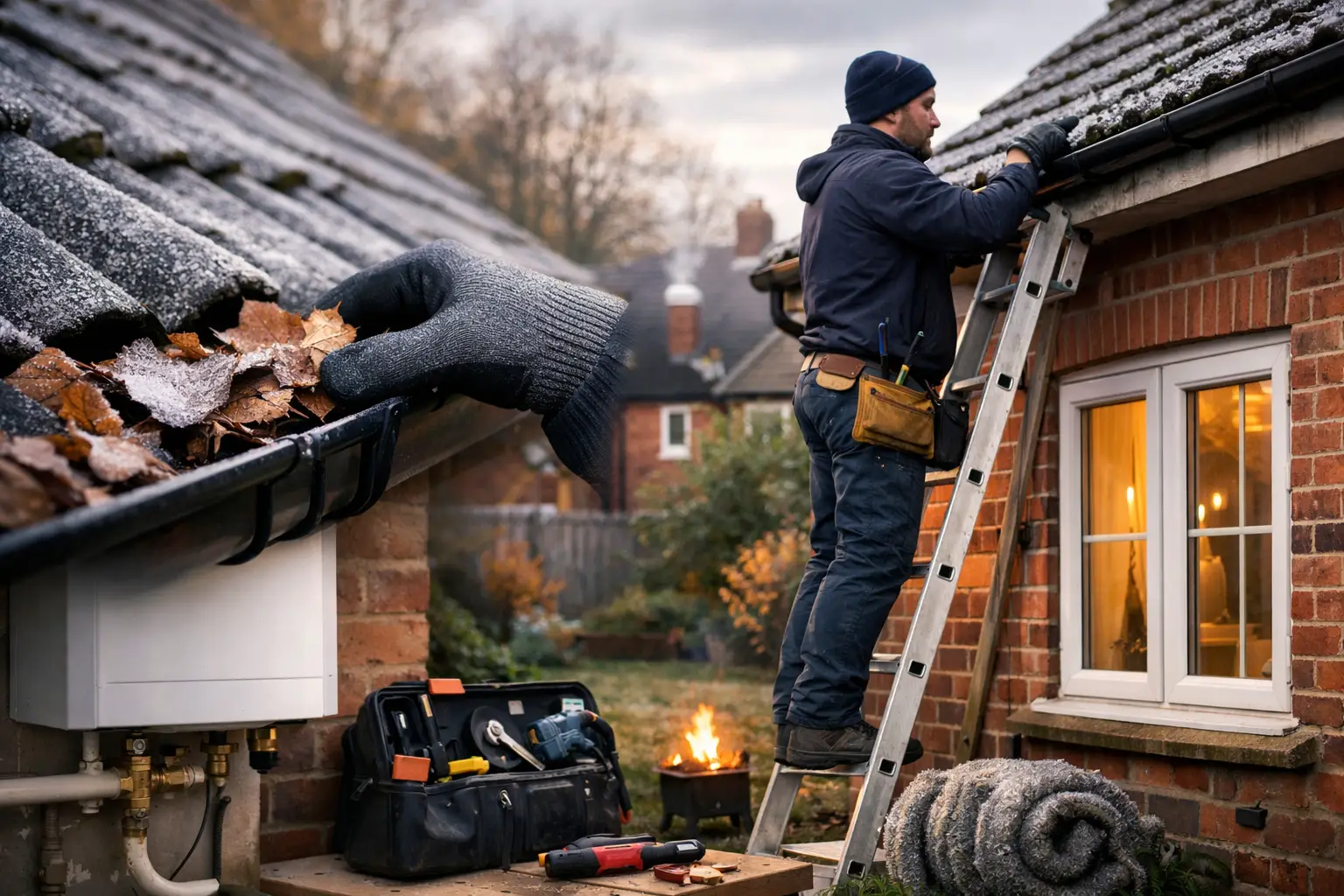
From ground level, look for missing, loose or uneven tiles, sagging gutters and debris in valleys. Do not climb onto a roof or lean a ladder against gutters unless you have the right equipment and experience. A qualified roofer can assess the condition safely and advise whether you need a small repair, repointing or more extensive work.
Gutters and downpipes deserve equal attention. Leaves, moss and silt can block them quickly in autumn, causing water to overflow against brickwork and windows. Check that downpipes are secure and discharge into drains properly. If rainwater pools near external walls, drainage may need clearing or the ground levels may need assessment.
Brickwork can also suffer in winter. Cracked mortar, damaged render and gaps around pipes allow moisture into the fabric of the building. When that moisture freezes and expands, the damage can worsen. Localised repointing or sealing may be enough, but avoid treating every crack with sealant. Some older homes need breathable materials, and the wrong repair can trap moisture in the wall.
Service the boiler and test your heating
A boiler that has sat unused through summer is best tested before the first cold spell. Turn on the heating, check every radiator and listen for unusual noises. If rooms heat unevenly, the system may need bleeding, balancing or a more detailed inspection. Cold radiators can be caused by trapped air, but persistent cold spots may point to sludge or circulation issues.
Arrange an annual boiler service with a Gas Safe registered engineer. This can identify faults before they turn into a breakdown and helps keep the system running efficiently. If you are a landlord, meeting your gas safety obligations is essential, but it is also good practice to make sure tenants know how to use the heating controls and report issues promptly.
Check visible pipes in lofts, garages, utility rooms and cupboards on external walls. Insulating exposed pipework can reduce the chance of freezing. If a pipe has frozen before, do not assume lagging alone will solve the problem. A plumber may need to review its position, the surrounding insulation or whether a small leak is contributing to the issue.
Never attempt gas appliance repairs yourself. If you smell gas, suspect a carbon monoxide issue or have a boiler that repeatedly loses pressure, treat it as urgent and contact an appropriate professional.
Stop draughts without causing damp
Draught-proofing is one of the most practical ways to make a home more comfortable. Check around windows, external doors, loft hatches, letterboxes and pipe entry points. Worn seals and ill-fitting doors are often straightforward fixes, while damaged window frames or failed double-glazed units may need specialist repair.
There is a trade-off. Homes need controlled ventilation, especially in kitchens, bathrooms and rooms where laundry dries indoors. Blocking extractor vents or permanently sealing air bricks can lead to condensation and mould. Focus on unwanted gaps, while keeping designed ventilation working properly.
Loft insulation is another worthwhile check. If insulation is thin, patchy or compressed, heat can escape through the roof. However, loft boards should not squash insulation, and eaves ventilation must remain clear. An insulation installer or builder can advise on the right approach where access is difficult or the loft has already been converted.
Inspect windows, doors and exterior timber
Paintwork is more than cosmetic on timber windows, doors and fascias. Cracked paint can allow moisture into the wood, leading to swelling, rot and sticking doors once the weather changes. Look closely at lower window sills, door thresholds and joints where water sits.
Minor defects can sometimes be repaired and repainted before winter. Soft, crumbling timber or widespread peeling may require a joiner or window specialist. Replacing a whole window is not always necessary, particularly in older properties where repair can preserve the original character. Equally, repeated repairs to badly deteriorated frames may not be the most cost-effective choice.
Make outdoor areas safe in wet and icy weather
Paths, steps, handrails and external lighting are easy to overlook until a dark, wet evening makes them a hazard. Repair loose paving, uneven steps and unstable handrails before they cause an accident. Clear leaves from walkways regularly, as they become slippery quickly when wet.
Test exterior lights and replace damaged fittings. Any electrical work outdoors should be completed by a competent electrician, especially where cables, water and metal fixtures are involved. If you rely on a gate, shed or garage for daily access, check hinges, locks and roofing too. A small adjustment now is far easier than forcing a swollen wooden gate in heavy rain.
Prioritise repairs by risk, not appearance
If your budget or time is limited, deal with repairs in order of consequence. Water ingress, unsafe electrics, gas concerns, heating faults and structural movement should come before decorative work. A cracked bathroom tile may wait, but a leaking shower tray could be damaging the floor below every time it is used.
These signs usually justify getting professional advice promptly:
- Water stains, dripping, mould growth or a persistent damp smell
- A boiler that cuts out, loses pressure or fails to heat water reliably
- Loose roof materials, overflowing gutters or damaged chimney flashing
- Flickering lights, tripping circuits, damaged sockets or exposed wiring
- Cracks that are widening, doors that suddenly stick or floors that feel uneven
Take clear photographs, note when the problem occurs and record any changes after rain or when the heating is on. This helps a tradesperson understand the job before visiting and makes quotes more accurate.
Choose the right trade before demand rises
Autumn is a busy period for roofers, plumbers, heating engineers and electricians. Booking early gives you more choice and time to compare the proposed work. Ask what is causing the problem, what the repair includes, whether materials are included and what happens if further damage is found once work begins.
For larger work, obtain more than one written quote and make sure you are comparing like for like. The cheapest quote may exclude access equipment, waste removal, materials or finishing work. For regulated jobs, confirm the relevant registration or certification, such as Gas Safe for gas work. For peace of mind, use a service that helps you find vetted local tradespeople, such as VeriTrade UK, and describe the issue clearly from the outset.
Cold weather exposes weak points in a property, but it also rewards preparation. Book the repair while it is still a planned job, not an emergency at the worst possible time.