
A boiler quote can make replacement sound like the only sensible option, especially when you have no heating or hot water. But the best checks before boiler replacement can prevent an unnecessary expense, reveal work that needs doing first and help you choose a system that properly suits your home.
For homeowners, landlords and property managers, the aim is not to keep an unreliable boiler running at all costs. It is to make a clear decision based on its condition, the likely repair bill, the property’s heating needs and the credentials of the person advising you.
Best checks before boiler replacement: confirm the real fault
Boilers often display a fault code, lose pressure or stop producing hot water for reasons that are not a terminal failure. A seized pump, failed fan, faulty sensor, diverter valve, frozen condensate pipe or issue with external controls may be repairable. Low pressure can also be caused by a small leak elsewhere in the heating system rather than a problem inside the boiler.
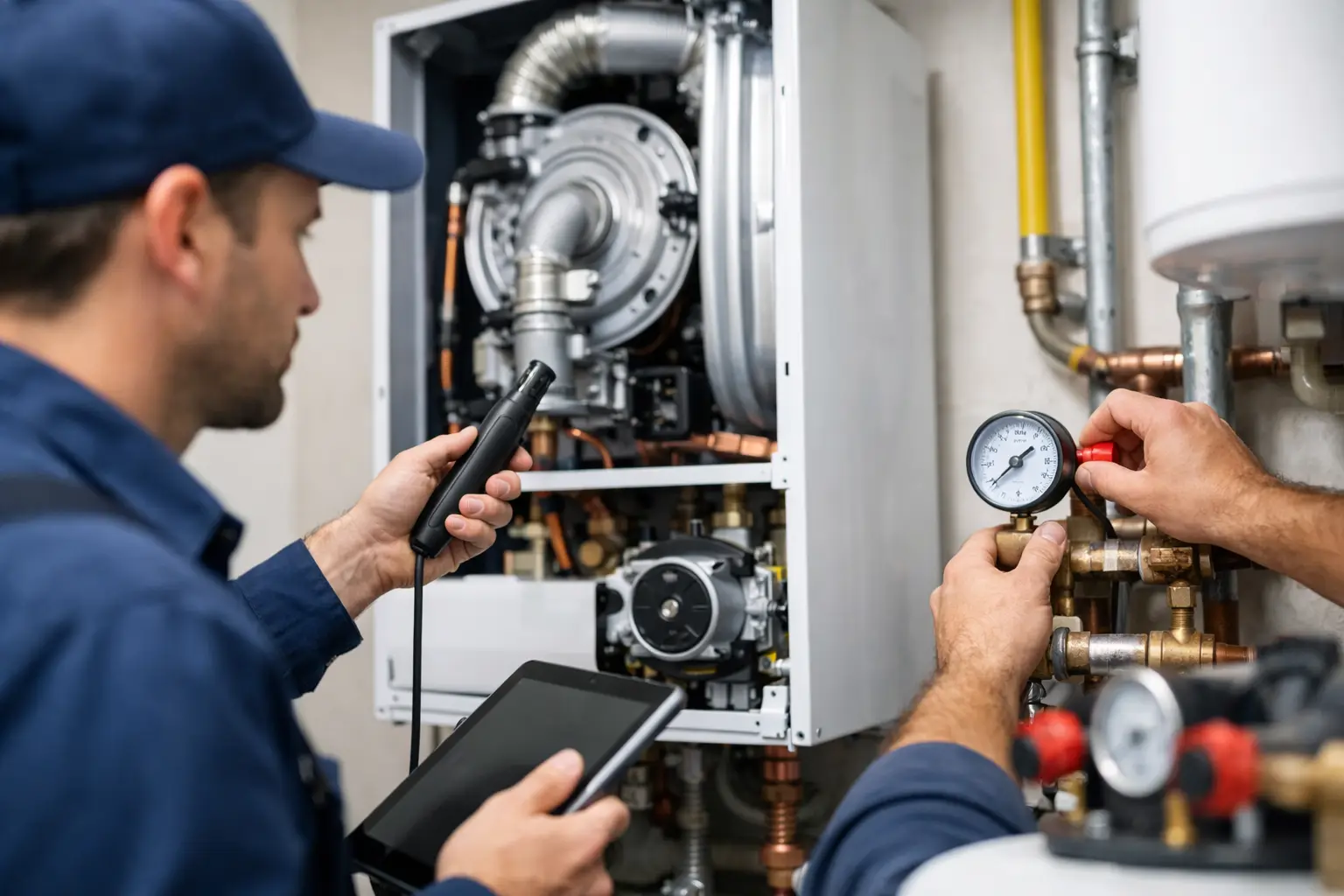
Ask a qualified engineer to diagnose the fault before discussing a replacement. They should explain what has failed, whether a repair is safe and practical, and whether they can identify the cause rather than simply reset the boiler. A clear diagnosis gives you something useful to compare when seeking another opinion.
If you smell gas, see scorch marks, notice soot around the appliance or feel unwell with headaches and dizziness while the boiler is running, treat this as a safety issue. Turn the appliance off if it is safe to do so, ventilate the property and contact an appropriately qualified professional or emergency service. Do not attempt a repair yourself.
Check the boiler’s age, service record and parts availability
Age matters, but it is not the whole story. A well-maintained boiler may give reliable service beyond its warranty period, while a poorly maintained newer unit can develop expensive faults. As a broad guide, boilers approaching 10 to 15 years old deserve a closer look when a major component fails.
Find the installation paperwork, servicing history and any previous repair invoices. Repeated call-outs for different faults can indicate that replacement is becoming better value. Equally, one isolated fault on a boiler that has been serviced annually may not justify changing it.
Ask whether replacement parts are readily available. Some older models remain repairable, but discontinued parts can be difficult to source or disproportionately costly. An engineer should be able to tell you whether the likely repair is a standard job or a temporary fix with further risk ahead.
Compare the repair cost with the full replacement cost
Do not compare a repair invoice only with the headline price of a new boiler. A replacement quote may include the boiler, flue, controls, filter, labour, system cleaning, certification and disposal of the old unit. It may also uncover necessary changes to pipework or the condensate run.
Instead, consider what the repair buys you. If a modest repair is likely to restore dependable heating for several years, it can be the sensible route. If the boiler needs a costly component, has a history of breakdowns and has limited parts support, replacement may offer better long-term value.
There is no fixed percentage that makes the decision automatic. A landlord with a tenant relying on one boiler may place more value on avoiding future disruption. A homeowner planning major renovation work soon may reasonably choose a short-term repair until the heating layout is finalised. Ask for the repair cost and replacement cost in writing, with what is and is not included.
Make sure the new boiler is correctly sized
A larger boiler is not automatically a better boiler. Oversizing can increase upfront cost and may lead to inefficient operation, while undersizing can leave you with poor hot water performance or rooms that struggle to warm up.
The right output depends on the number of bathrooms, the type of hot water system, radiator demand, insulation levels and household habits. A compact flat with one shower has very different needs from a family home where two showers may run at the same time.
A competent installer should ask practical questions about your property rather than recommend the same model for every job. They may need to assess room heat loss, radiator sizes and your existing system. This is particularly useful if you have extended the home, converted a loft or added an en-suite since the current boiler was fitted.
Choose the system, not just the boiler
A combi boiler can be a good fit where space is limited and hot water demand is modest. It heats water on demand and removes the need for a separate hot water cylinder. However, it may not be ideal for a larger household that regularly uses more than one bathroom at once.
A system boiler with an unvented cylinder can offer stronger hot water provision, but it needs space and may involve more installation work. A regular boiler may be retained where an existing conventional system is in good condition, although the best option depends on the property and the planned use of it. Ask the installer to explain the trade-off in plain terms.
Inspect the wider heating system
A new boiler connected to a dirty, poorly balanced system may not perform as it should. Cold spots on radiators, noisy pipes, frequent pressure loss and discoloured water can point to sludge, corrosion, air or circulation problems.
Before installation, ask whether the system needs a chemical clean, powerflush or other treatment. These are not interchangeable services, and not every home needs the most intensive option. The recommendation should follow an assessment of the system, not be added as a vague extra.
It is also worth checking radiator valves, thermostatic radiator valves and any leaking pipework. Replacing or improving these during boiler work can be more efficient than arranging separate visits later. A magnetic filter is commonly recommended to help protect the new boiler from debris, but ask what maintenance it will need at future services.
Check controls, insulation and running costs first
Replacing the boiler alone will not solve heat loss through an uninsulated loft, draughty doors or poorly controlled heating. Before committing, look at the changes that could reduce demand and make any new boiler work harder for you.
Modern controls can make a noticeable difference to comfort and fuel use. Options include programmable thermostats, smart controls, zoning and weather compensation. The best choice depends on how predictable your routine is and how the property is heated. Smart controls are useful for some households, but a well-set simple programmer is often enough.
Ask the installer to show how the controls will work when the job is complete. A boiler that is efficient on paper can still waste energy if schedules are wrong, rooms are overheated or the flow temperature is set unnecessarily high.
Check installation practicalities before accepting a quote
The cheapest quotation is not always like-for-like. Moving a boiler from a kitchen cupboard to a loft, garage or utility room can add work for pipework, electrics, ventilation access, the flue and condensate drainage. A loft installation should also allow safe access for annual servicing and future repair.
Ask where the flue will terminate and whether its position complies with current requirements. Check where the condensate pipe will run, especially if it goes outside, as poorly protected external pipework can freeze in cold weather. If the boiler is in a bedroom or near living spaces, discuss noise and access too.
For gas boiler work, use a Gas Safe registered engineer with the correct qualifications for the appliance and work involved. Oil boiler work should be handled by a suitably competent technician, often registered with OFTEC. Once the installation is complete, make sure you receive the required paperwork, commissioning records, warranty details and relevant Building Regulations notification information.
Get detailed, comparable quotations
Seek more than one quotation where time allows, but give each tradesperson the same information. A proper quote should state the proposed boiler or system, warranty length, controls, cleaning work, filter, flue changes, labour, disposal and certification. It should also identify assumptions, such as whether existing pipework is suitable.
Be wary of vague prices that leave key items to be decided after work starts. A trusted local tradesperson will not always be the lowest-priced option, but they should be clear about the scope, answer questions directly and provide evidence of the right registration and insurance. Through VeriTrade UK, you can compare local professionals and choose someone with the right experience for your property.
Keep copies of the quote and ask what happens if the installer finds a hidden issue. Agree how additional work will be approved before it is carried out. That simple step avoids pressure decisions when your heating is already off.
A replacement boiler should leave you with reliable heat, suitable hot water and clear paperwork, not fresh uncertainty. Take the time to get the diagnosis and specification right, then appoint a qualified local professional who can explain the job before they begin.